

"Wachsmann offers an unprecedented, integrated account of the Nazi concentration camps from their inception in 1933 through their demise, seventy years ago, in the spring of 1945. The Third Reich has been studied in more depth than virtually any other period in history, and yet until now there has been no history of the camp system that tells the full story of its broad development and the everyday experiences of its inhabitants, both perpetrators and victims, and all those living in what Primo Levi called 'the gray zone.' In KL, Wachsmann fills this glaring gap in our understanding. He not only synthesizes a new generation of scholarly work, much of it untranslated and unknown outside of Germany, but also presents startling revelations, based on many years of archival research, about the functioning and scope of the camp system. Examining, close up, life and death inside the camps, and adopting a wider lens to show how the camp system was shaped by changing political, legal, social, economic, and military forces, Wachsmann produces a unified picture of the Nazi regime and its camps."--Provided by publisher
Nikolaus Wachsmann Knihy
Nikolaus Daniel Wachsmann je profesorem moderních evropských dějin. Jeho práce se zaměřuje na analýzu historických událostí a jejich dopadu. Wachsmann zkoumá klíčové momenty evropských dějin a jejich trvalý vliv. Jeho odbornost spočívá v hlubokém porozumění historickým procesům.

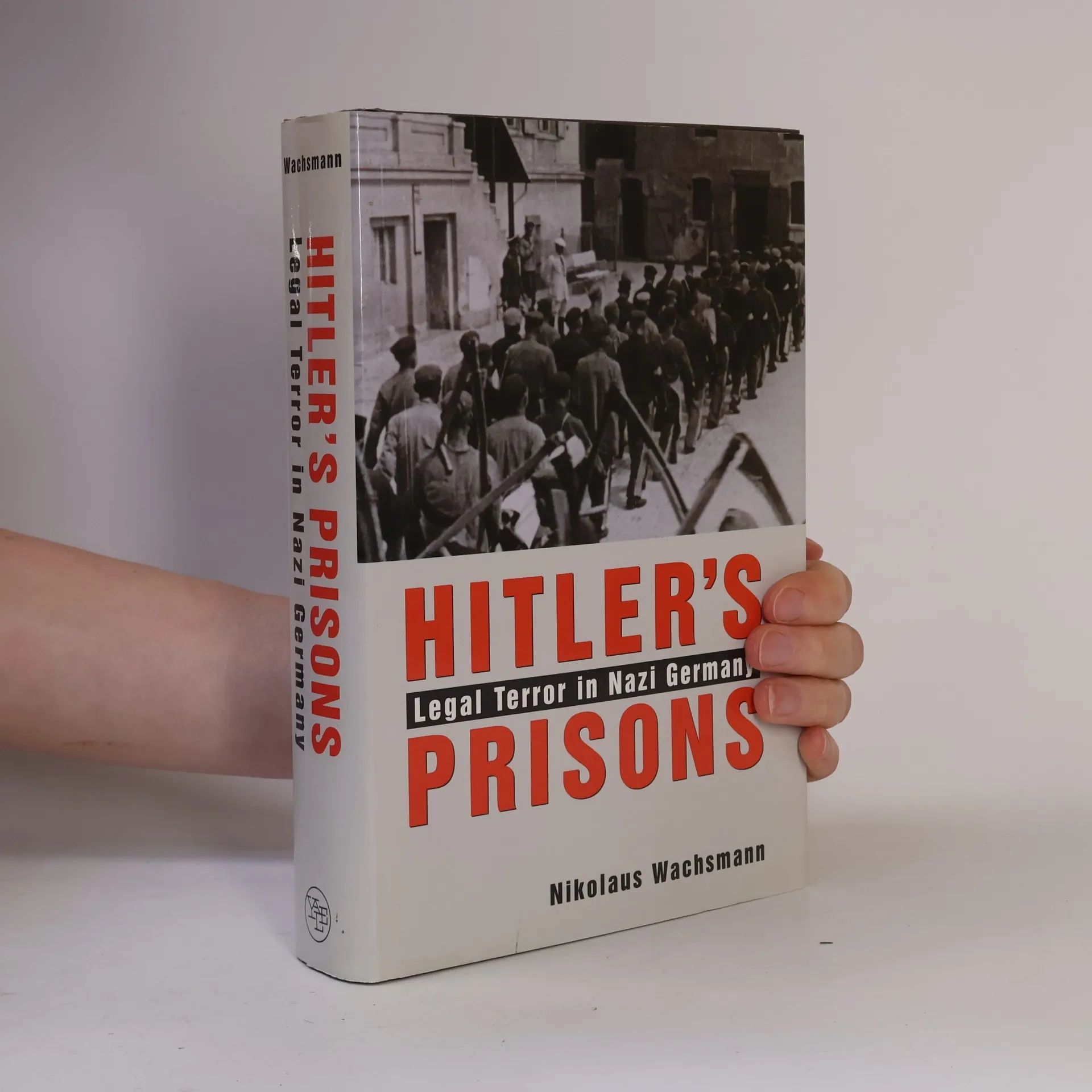

State prisons played an indispensable part in the terror of the Third Reich, incarcerating many hundreds of thousands of men and women during the Nazi era. This important book illuminates the previously unknown world of Nazi prisons, their victims, and the judicial and penal officials who built and operated this system of brutal legal terror. Nikolaus Wachsmann describes the operation and function of legal terror in the Third Reich and brings Nazi prisons to life through the harrowing stories of individual inmates. Drawing on a vast array of archival materials, he traces the series of changes in prison policies and practice that led eventually to racial terror, brutal violence, slave labor, starvation, and mass killings. Wachsmann demonstrates that "ordinary" legal officials were ready collaborators who helped to turn courts and prisons into key components in the Nazi web of terror. And he concludes with a discussion of the whitewash of the Nazi legal system in post-war West Germany. "One of the most important books to be published on Nazi Germany in many years."-Richard J. Evans, University of Cambridge; "An outstanding piece of work-one of the best studies of the Third Reich to appear for a long time. No serious future work on the Nazi state will be able to by-pass this book."-Sir Ian Kershaw, author of 1889-1936 Hubris and 1936-1945 Nemesis
Gefangen unter Hitler
Justizterror und Strafvollzug im NS-Staat
Über nationalsozialistische Konzentrationslager wurde viel geschrieben, doch die Gefängnisse des Hitler-Staats blieben bisher unbeachtet. Nikolaus Wachsmann bietet eine fundierte und beklemmende Gesamtdarstellung der Rolle des Strafvollzugs im NS-Herrschaftssystem. Damit verleiht er einer bisher vernachlässigten Gruppe von Opfern des Nationalsozialismus Gesicht und Stimme. Zwischen 1933 und 1942 waren in den Gefängnissen der Nationalsozialisten deutlich mehr Menschen inhaftiert als in den Konzentrationslagern. Wer das Terrorsystem des „Dritten Reichs“ verstehen will, muss diesen Aspekt der nationalsozialistischen Verfolgung und Gewaltmaßnahmen betrachten. Wachsmann schließt diese Forschungslücke mit seiner vielfach ausgezeichneten Darstellung, die auf zahlreichen, bisher unbeachteten Quellen basiert. Er untersucht die verworrene Verwaltung unter der Nazidiktatur und hinterfragt, wer die angeblichen Straftäter waren, die in Hitlers Gefängnissen saßen. Eine seiner Thesen besagt, dass die Justiz eine zentrale Rolle bei der Kriminalisierung politisch Andersdenkender spielte. Zudem räumt er mit hartnäckigen Fehlurteilen auf, etwa der Vorstellung, dass in den Nazigefängnissen Recht und Ordnung geherrscht hätten. Diese umfassende Darstellung zu den Gefängnissen im NS-Staat schließt eine der letzten Lücken in der Erforschung des Nationalsozialismus.