

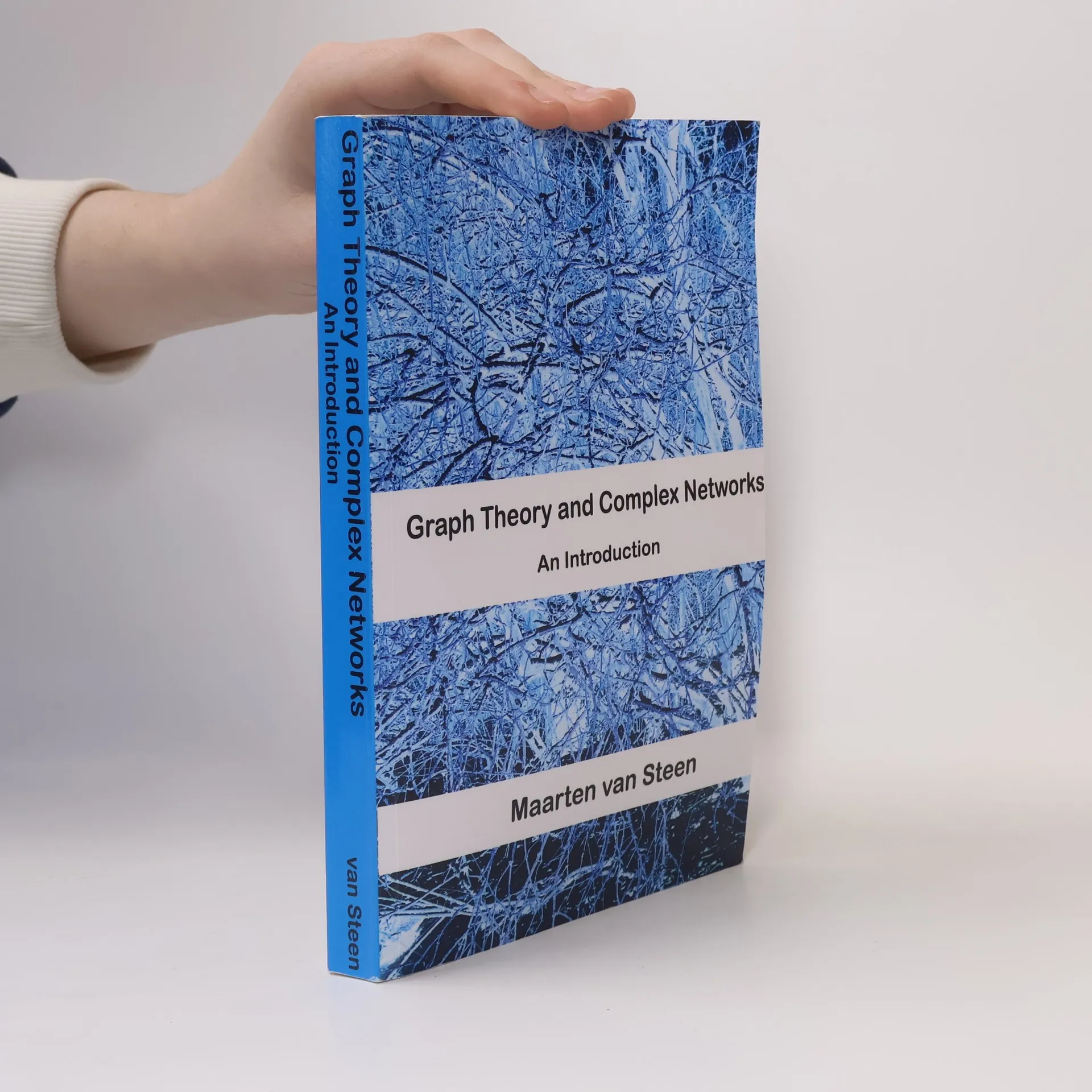
This book explains the fundamentals of graph theory for students in computer or information sciences, highlighting its practical applications in network science. It addresses the common intimidation students feel towards mathematics by focusing on mathematical notations and proof techniques in the early chapters. The aim is to show that the notations often pose a greater challenge than the underlying concepts. This foundational approach prepares students to utilize graph theory in analyzing complex networks. In the second part, topics such as random networks, small worlds, Internet structure, peer-to-peer systems, and social networks are introduced at an elementary level. By the end, students will feel confident in three key areas: their ability to read and understand basic mathematics related to graph theory, their understanding of how graph theory applies to optimization problems like routing in communication networks, and their knowledge of small worlds and random networks. An accompanying website provides access to the book, supplementary materials, exercises, Mathematica notebooks, graph analysis data, and complex network generators.
Maarten van Steen Pořadí knih (chronologicky)
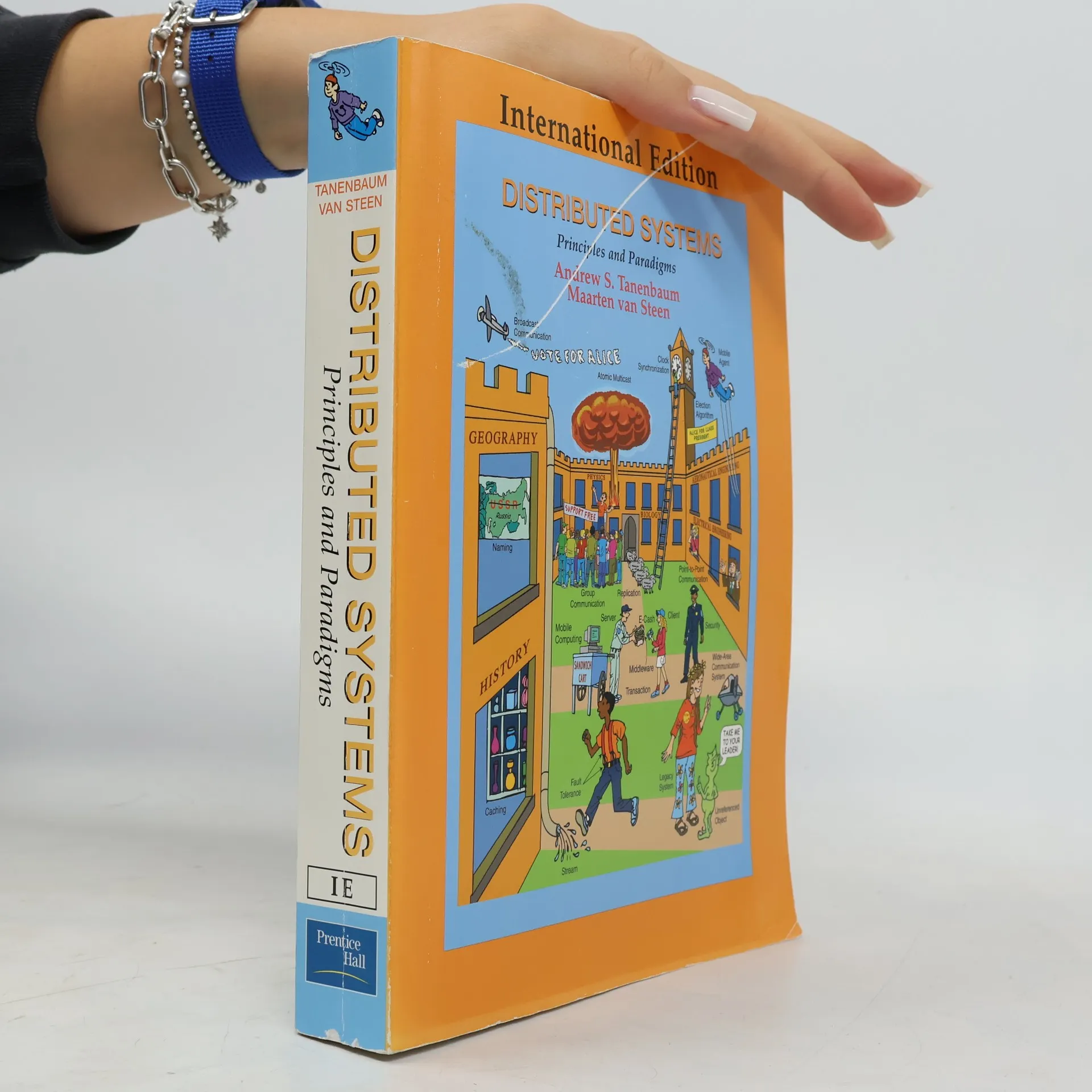
Virtually every computing system today is part of a distributed system. Programmers, developers, and engineers need to understand the underlying principles and paradigms as well as the real-world application of those principles. Now, internationally renowned expert Andrew S. Tanenbaum – with colleague Martin van Steen – presents a complete introduction that identifies the seven key principles of distributed systems, with extensive examples of each. For all developers, software engineers, and architects who need an in-depth understanding of distributed systems.