Immanuel Kant byl klíčovou postavou osvícenství, jehož filozofické dílo zásadně přetvořilo moderní myšlení. Zkoumal samotné hranice lidského poznání a navrhoval, že pochopení toho, jak myslíme, nám umožňuje klást smysluplné otázky o povaze reality. Kant se snažil překlenout propast mezi racionalismem a empirismem, argumentoval, že rozumu bez zkušenosti jsou vlastní iluze, zatímco zkušenost bez struktury rozumu zůstává subjektivní. Jeho práce položila základy pro rozsáhlé debaty v metafyzice, etice a estetice a jeho odkaz dodnes ovlivňuje hlavní proudy filozofie.
Vedle svých obsáhlých spisů k teoretické a morální filosofii a k estetice je Kant autorem řady drobnějších studií, v nichž reaguje takříkajíc na dobovou objednávku. Předložený výbor obsahuje studie Co je osvícenství, Idea obecných dějin ve světoobčanském smyslu, Domnělý začátek lidských dějin, Konec všech věcí, O domnělém právu lhát z lásky k bližnímu. Výbor uzavírá text O radikálním zlu v lidské přirozenosti.
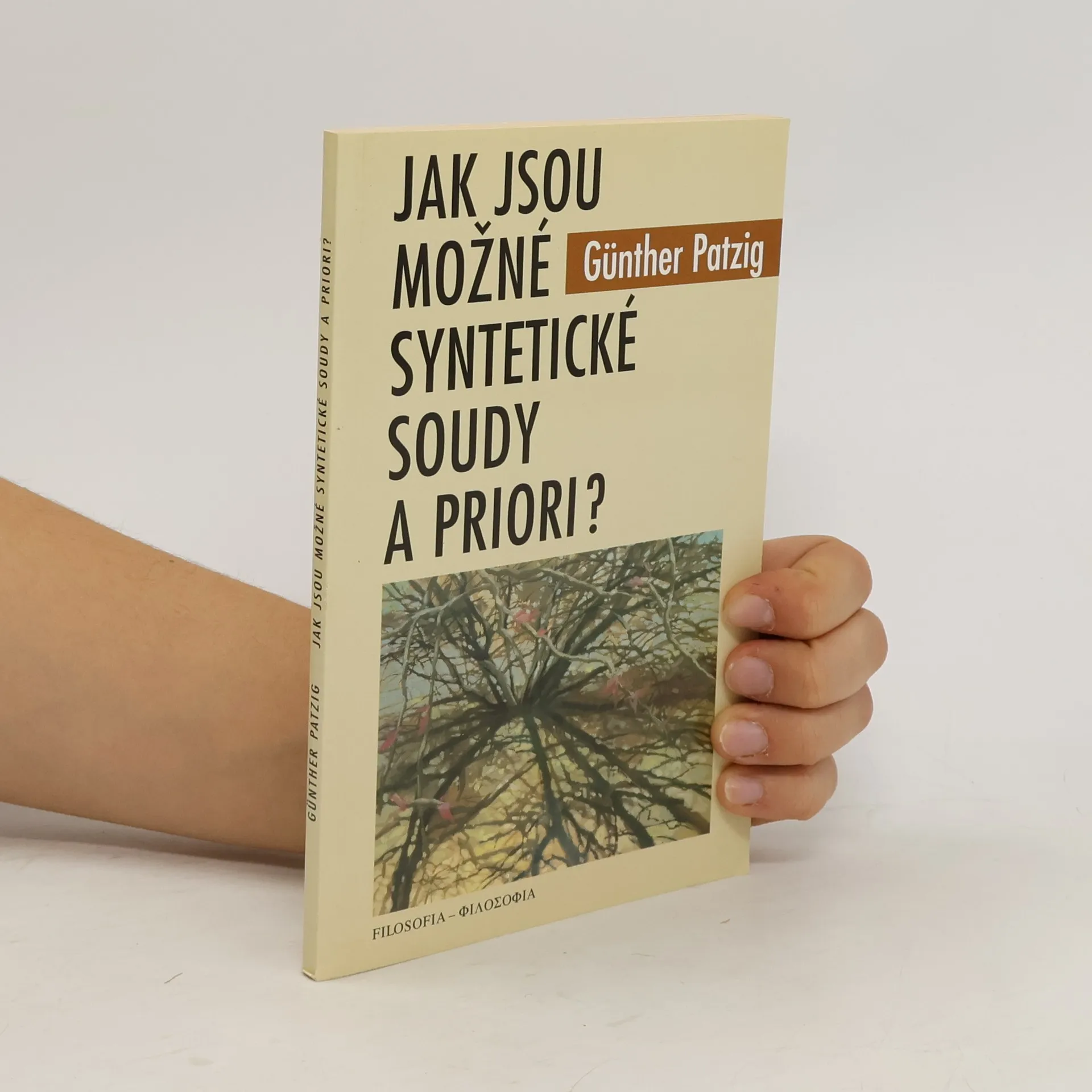
Autor v knize představuje neobyčejně jasně a precizně Kantovu odpověď na otázku "Jak jsou možné syntetické soudy a priori?", na jejímž úspěšném zodpovězení závisí nejen úspěšnost projektu Kritiky čistého rozumu, ale celého Kantova založení filozofie, jež je v Kritice čistého rozumu provedeno. Patzigova studie jakožto optimální úvod do jinak obtížně proniknutelné problematiky Kritiky čistého rozumu tak zároveň představuje i úvod do celé problematiky Kantovy filozofie. Pro jasnost a neotřelost jejích tezí mohou Patzigovu studii ocenit jak ti, kdo se s Kantovou filozofií teprve seznamují, tak i ti, kdo si o ní již utvořili pojem.
Ve svém stěžejním díle, Kritice čistého rozumu (1781, 1787², česky 1930, 2001, 2020), vykládá Kant podmínky možnosti poznání a stanovuje jeho možný rozsah. Do tohoto rozsahu patřil dříve též Bůh, duše a celek světa, jimiž se zabývaly příslušné obory metafyziky. Podle Kanta se Bůh, duše a celek světa nacházejí mimo hranice možného poznání, v rámci poznání však mají nezbytnou funkci regulativních idejí rozumu. Jedná se o základní spis moderní filosofie. Předložený svazek je upraveným vydáním českého překladu spisu z roku 2020. Obsahuje kompletní text druhého vydání spisu včetně všech pasáží z prvního vydání, které Kant do druhého vydání nepřevzal. Do svazku byly rovněž zařazeny Kantovy rukopisné poznámky z jeho příručního exempláře prvního vydání Kritiky čistého rozumu.
Klasický spis moderního myšlení. Kant zde navazuje na svá zkoumání v oblasti teoretické a praktické filosofie a završuje svůj kritický projekt. Již vzhledem k tomu, že soudnost je Kantem chápána jako svorník mezi teoretickým a praktickým uplatněním rozumu, není Kritika soudnosti redukovatelná na pouhý příspěvek k filosofii umění či na pouhou meditaci o kráse a vznešenosti. Kant v souvislosti s jistými fenomény formuluje celistvý filosofický postoj a nezřídka staví do nového světla své dřívější teze týkající se poznání a lidského konání.
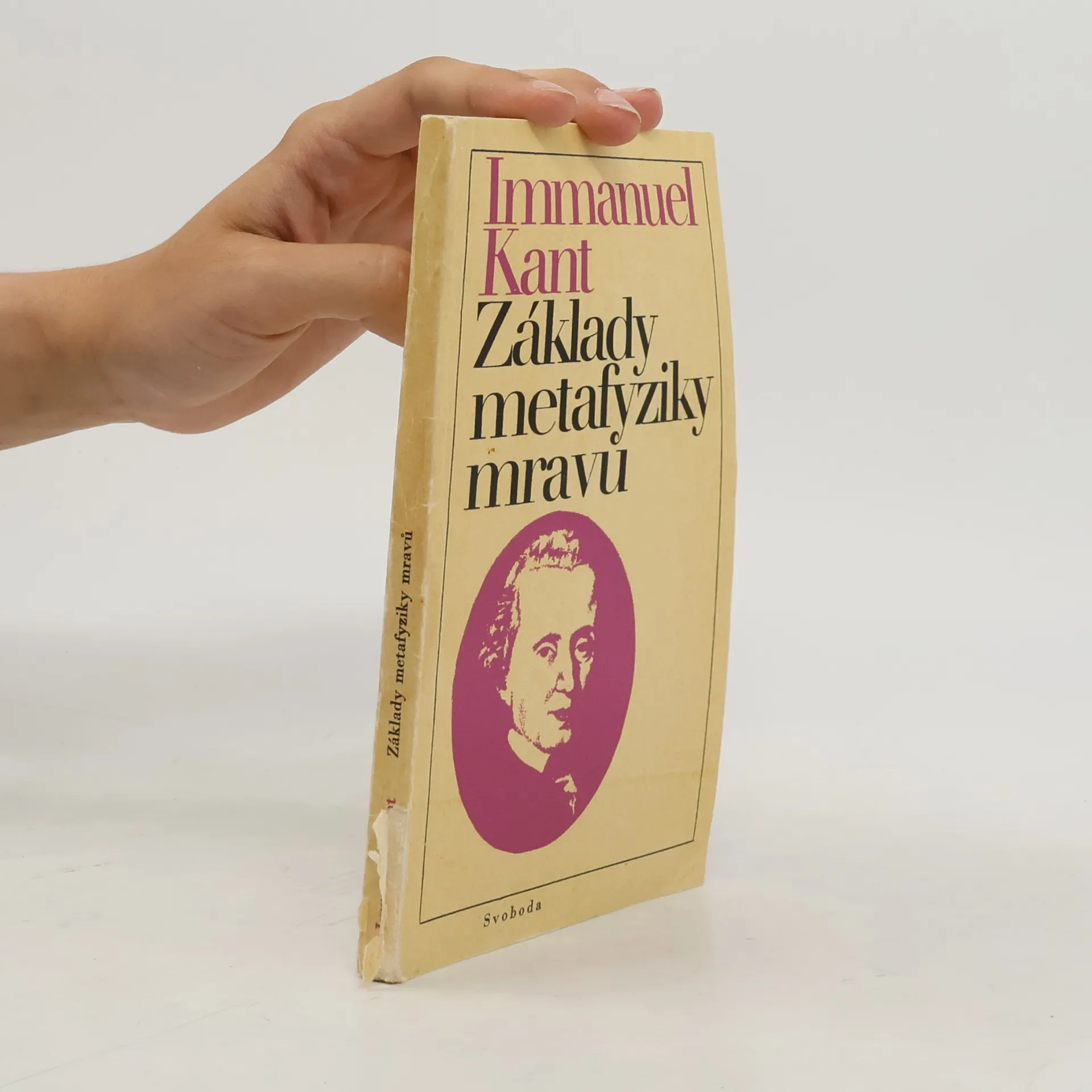
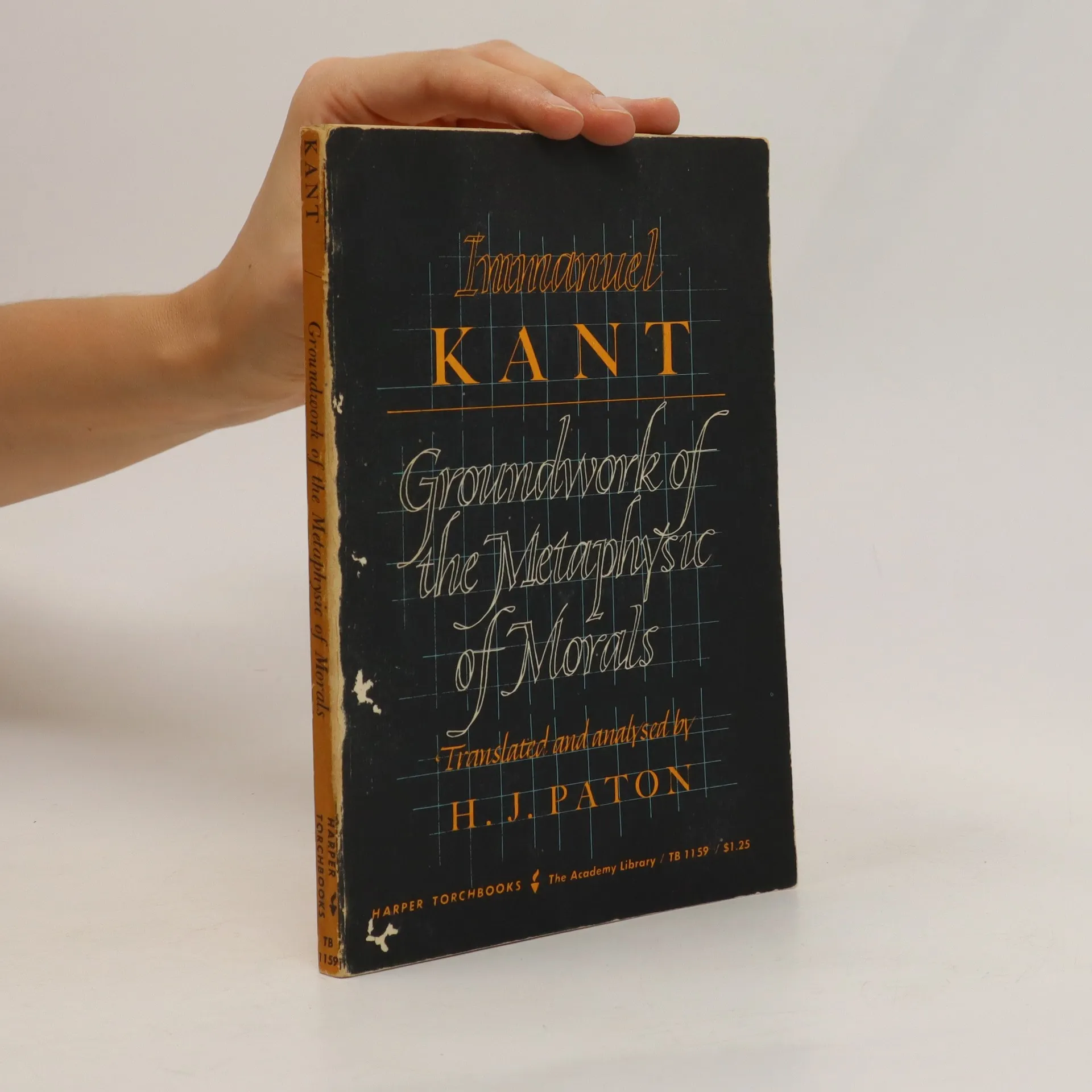
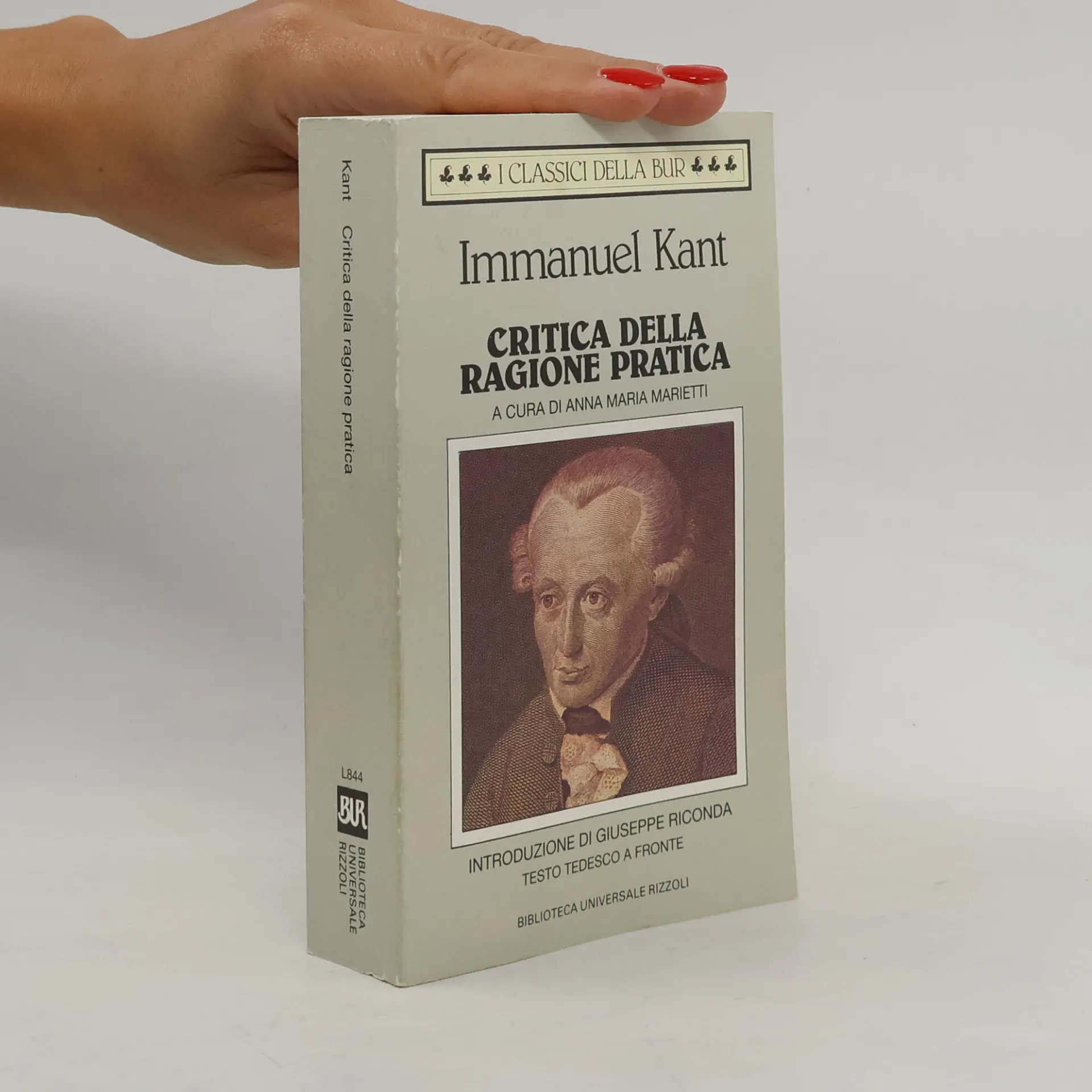
Základní spis Kantovy praktické filosofie. Autor v něm stanovujenejvyšší princip morality, vysvětluje jeho funkci a odstiňuje jej od jiných koncepcí založení praktické filosofie. Třetí opravené vydánípřekladu L. Menzela.
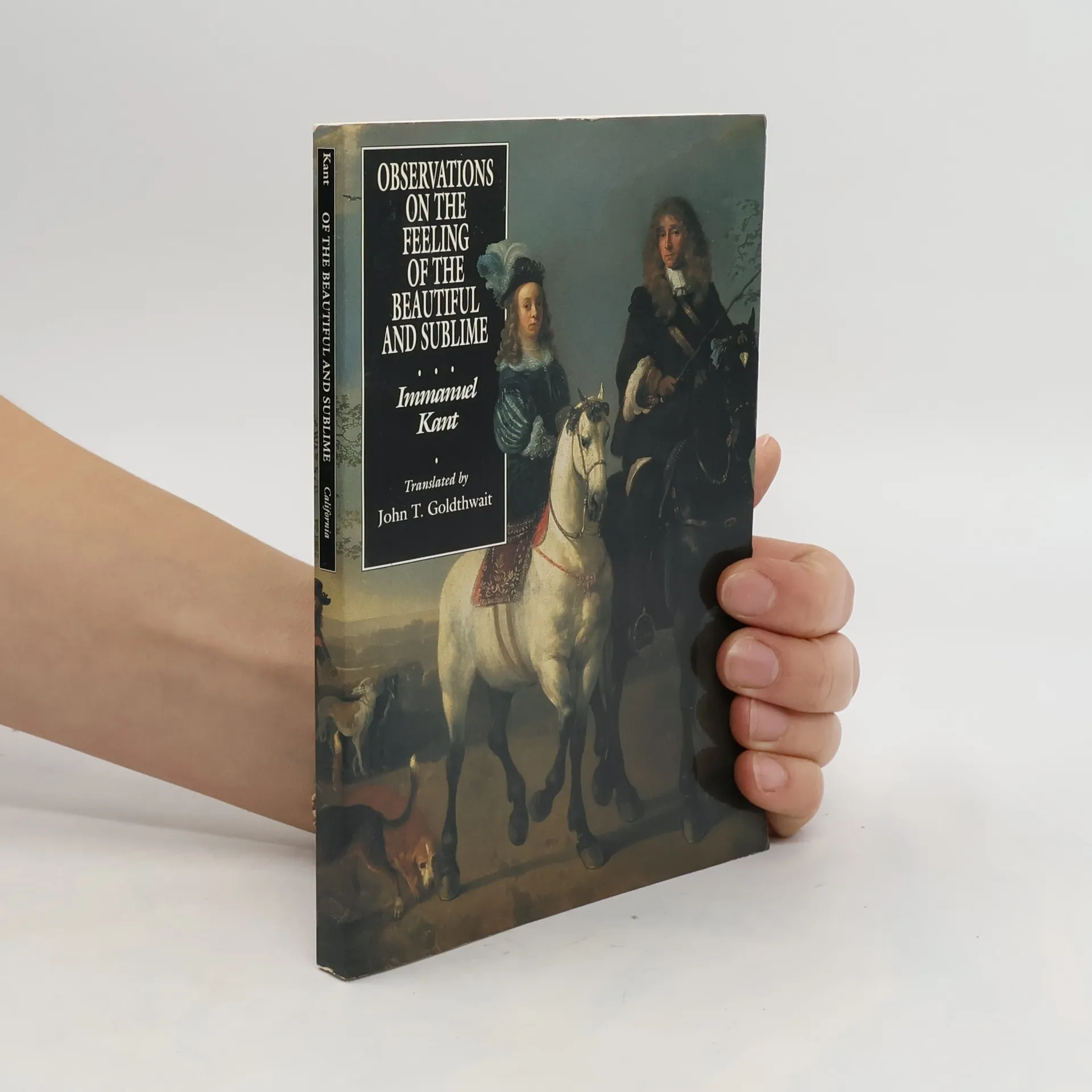
Kantův spis Pozorování citu krásna a vznešena z roku 1764 má v celku jeho díla zvláštní postavení. Jedná se o dílo předznamenávající svým tématem Kritiku soudnosti (1790), přitom patří ještě do Kantova předkritického období. Nadto jde o dílo populární, určené širší veřejnosti. Kant zde předkládá filosofická pozorování a formuluje hypotézy principů působících za jevy, jež pak ověřuje na pozorovaném materiálu. Vlastním tématem díla jsou vyšší či jemnější pocity (prožitky a požitky), jejichž základ Kant spatřuje v kombinaci pocitů krásna a vznešena, pro něž má člověk cit. Kant zároveň zkoumá jejich působení v morálce, u lidí rozdílných temperamentů, ve vztahu mužů a žen a v charakterech národů. V tomto smyslu jde o dílo podnětné nejen pro filosofy.
Klasické dílo z r. 1783 ozřejmuje analytickým způsobem obsah autorovy Kritiky čistého rozumu, zpracované syntetickou metodou. Jsou v něm podrobeny rozboru podmínky našeho možného poznání. Kant pátrá po charakteru poznatků v dosavadních vědách a vytváří ideu nové vědy vížící se k subjektu. Tento druhý český překlad spisu je moderně uzpůsoben (terminologicky, lexikálně, stylisticky), aniž se vzdaluje syntaxi Kantově.
3. vydání (druhé opravené vydání překladu z roku 1972)
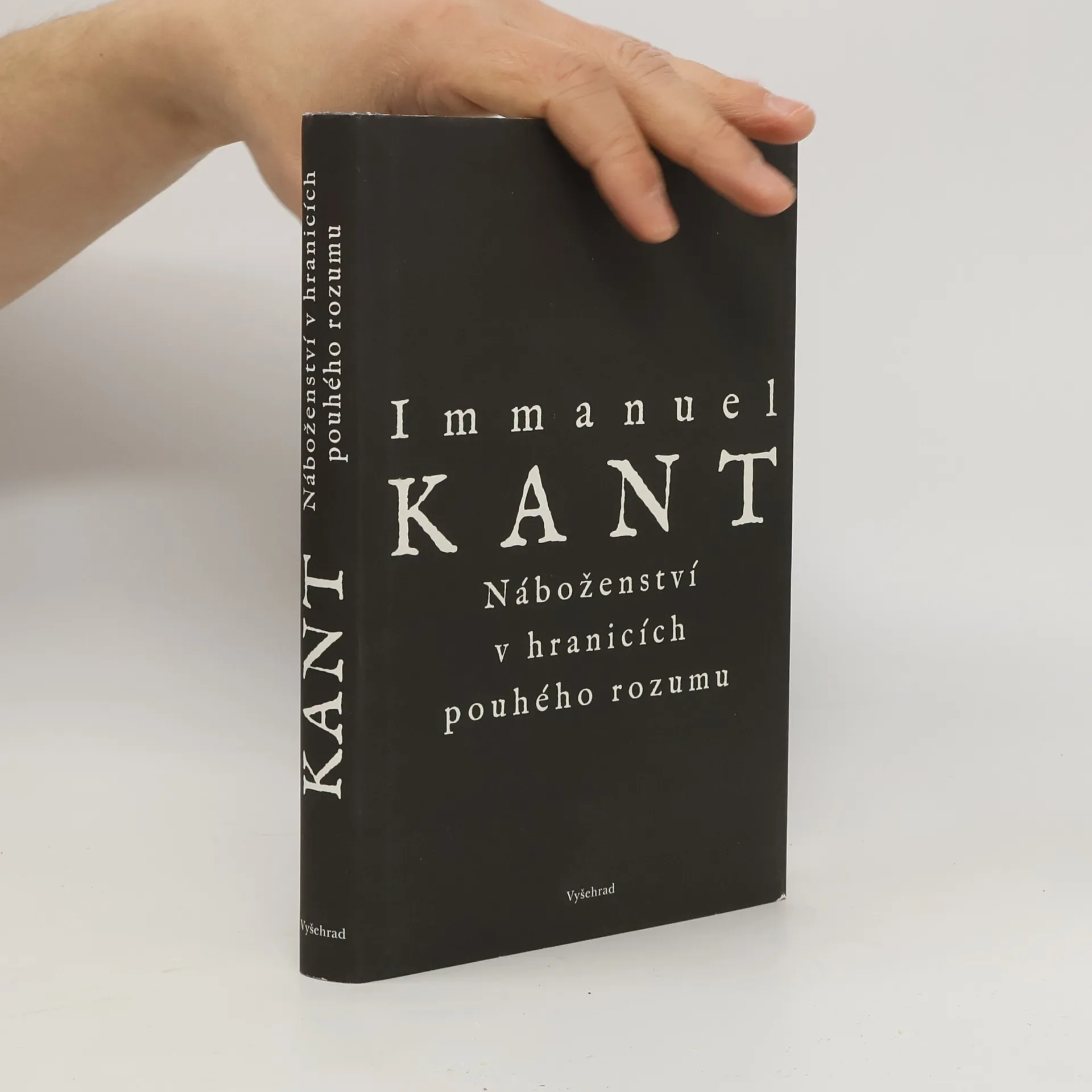
V době, kdy text vyšel, byl již Kant proslulým filosofem, autorem trojice svých „Kritik“ (1781, 1788, 1790). V Kritice čistého rozumu shrnuje podstatu lidského tázání do tří otázek: Co mohu vědět? Co mám dělat? V co smím doufat? Jsou-li Kantovy tři Kritiky pokusem o odpověď především na první dvě z těchto otázek, je jeho spis o náboženství jeho odpovědí na otázku třetí. Výchozím bodem jeho úvah se zde stává otázka původu zla a vztah dobrého a zlého principu v člověku.
Kantovo dílo mělo velký význam pro vývoj novověké filosofie náboženství. Lze je považovat jednak za vyvrcholení první fáze vývoje osvícenské filosofie náboženství, jednak ale i za jakousi „výhybku“, jež vlivem Kantova kriticismu (jeho tzv. „kopernikánského obratu“) dala dalšímu vývoji filosofie náboženství od 19. století až do naší doby zcela nový směr.
Stěžejní Kantův příspěvek k dějinám politické filosofie, ve kterém předkládá model mírového soužití mezi národy, doplňuje spis vysvětlující jeho praktickou filosofii založenou na kategorickém imperativu. ISBN 80-86005-55-2 je chybné, správné ISBN 80-86005-85-2 není v knize uvedeno.
Klasické dílo z r. 1783 ozřejmuje analytickým způsobem obsah autorovy Kritiky čistého rozumu, zpracované syntetickou metodou. Jsou v něm podrobeny rozboru podmínky našeho možného poznání. Kant pátrá po charakteru poznatků v dosavadních vědách a vytváří ideu nové vědy vížící se k subjektu. Průkopnický první český překlad.
Vrcholné dílo klasika světové filozofie kriticky zkoumá základní principy dosavadního vědeckého i metafyzického poznání. Analýza matematického a přírodovědeckého poznání se stává východiskem pro hledání podmínek poznání metafyzického. Význam metafyziky v lidském poznání je nezpochybnitelný. Vědecké poznání se opírá o apriorní schopnosti rozumu, neboť má své kořeny v tzv. syntetických soudech a priori, které umožňuje aktivita rozumu. Vědu umožňuje pouze důkaz apriorní podmínky poznání: nemůže se tudíž nikdy zabývat realitou, nýbrž jejími jevy, formulovanými naší vlastní zkušeností a aktivitou rozumu. Vědecké poznání vytváří vlastní realitu... Toto východisko slouží k rozboru podstaty metafyzického poznání. Celá dosavadní metafyzika oceňovala realitu „věcí o sobě“, avšak Kant zdůrazňuje reálnou neprokazatelnost, jelikož představují pouhou syntézu rozumových aktivit. Metafyzika se proto musí stát kritikou úlohy rozumu.
A survey of the historical development of the idea of race, this anthology offers pre-twentieth century theories about the concept of race, classic twentieth century sources reiterating and contesting ideas of race as scientific, and several philosophically relevant essays that discuss the issues presented. A general Introduction gives an overview of the readings. Headnotes introduce each selection. Includes suggested further readings.
This volume is part of the first comprehensive English edition of Immanuel Kant's works, aiming to provide translations from the best modern German edition in a uniform format for scholars. The complete edition will encompass all of Kant's published writings and a selection of unpublished works, including the Opus postumum, Nachlass, lectures, and correspondence. Kant's views on logic are pivotal in his critical writings, notably the Critique of Pure Reason. Since he published only one brief essay on logic, understanding his perspectives requires examining texts from his logic lectures. This volume features three previously untranslated transcripts of Kant's logic lectures: the Blumberg Logic from the 1770s, the Vienna Logic (with the newly discovered Hechsel Logic) from the early 1780s, and the Dohna-Wundlacken Logic from the early 1790s. Additionally, it includes a new translation of the Jasche Logic, compiled at Kant's request and published in 1800. These texts illuminate Kant's evolving views on logic, its relationship with other disciplines, and key concepts central to his philosophy. They also portray Kant as a popular and influential lecturer. The volume contains substantial editorial apparatus, including a general introduction, linguistic and factual notes, glossaries of key terms, and a concordance linking Kant's lectures to George Frederick Meier's Excerpts from the Doctrine of Reason.
First published in 1784, Kant's immortal essay is now a part of the Penguin Great Ideas series. This series is ideal for readers who want to explore and savor the Great Ideas that have shaped our world.
Kant's only aesthetic work apart from the Critique of Judgment, Observations on the Feeling of the Beautiful and Sublime gives the reader a sense of the personality and character of its author as he sifts through the range of human responses to the concept of beauty and human manifestations of the beautiful and sublime. Kant was fifty-eight when the first of his great Critical trilogy, the Critique of Pure Reason, was published. Observations offers a view into the mind of the forty-year-old Kant.
Religion within the Boundaries of Mere Reason is a key element of the system of philosophy which Kant introduced with his Critique of Pure Reason, and a work of major importance in the history of Western religious thought. It represents a great philosopher's attempt to spell out the form and content of a type of religion that would be grounded in moral reason and would meet the needs of ethical life. It includes sharply critical and boldly constructive discussions on topics not often treated by philosophers, including such traditional theological concepts as original sin and the salvation or 'justification' of a sinner, and the idea of the proper role of a church. This volume presents it and three short essays that illuminate it in new translations by Allen Wood and George di Giovanni, with an introduction by Robert Merrihew Adams that locates it in its historical and philosophical context.
A treatise on epistemology that presents a systematic exposition of the nature and limits of human knowledge. The authors explore the conditions and requirements for human cognition, as well as the role of the knowing subject in the process of knowledge acquisition and validation.
This publication focuses on reproducing historical works in large print, catering specifically to individuals with impaired vision. Megali, the publishing house behind this initiative, aims to enhance accessibility and promote the enjoyment of reading for all, ensuring that important historical texts are available in a format that is easier to read.
Focusing on accessibility, this work is a reproduction of a historical text by the Megali publishing house, which specializes in large print editions. This initiative aims to facilitate reading for individuals with impaired vision, ensuring that important historical works remain available to a wider audience.
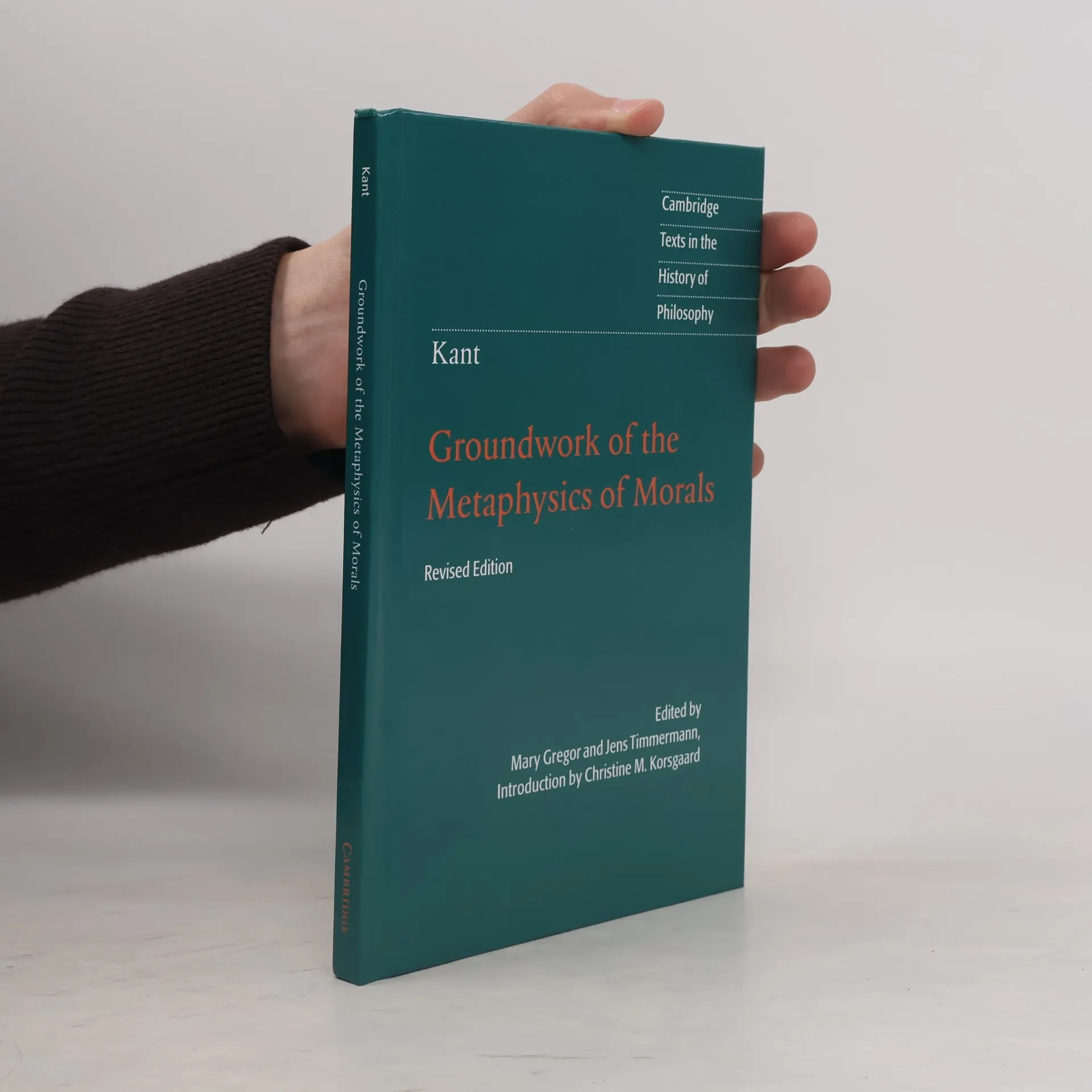
Published in 1785, Immanuel Kant's Groundwork of the Metaphysics of Morals ranks alongside Plato's Republic and Aristotle's Nicomachean Ethics as one of the most profound and influential works in moral philosophy ever written. In Kant's own words, its aim is to identify and corroborate the supreme principle of morality, the categorical imperative. He argues that human beings are ends in themselves, never to be used by anyone merely as a means, and that universal and unconditional obligations must be understood as an expression of the human capacity for autonomy and self-governance. As such, they are laws of freedom. This volume contains Mary Gregor's acclaimed translation of the work, sympathetically revised by Jens Timmermann, and an accessible, updated introduction by Christine Korsgaard.
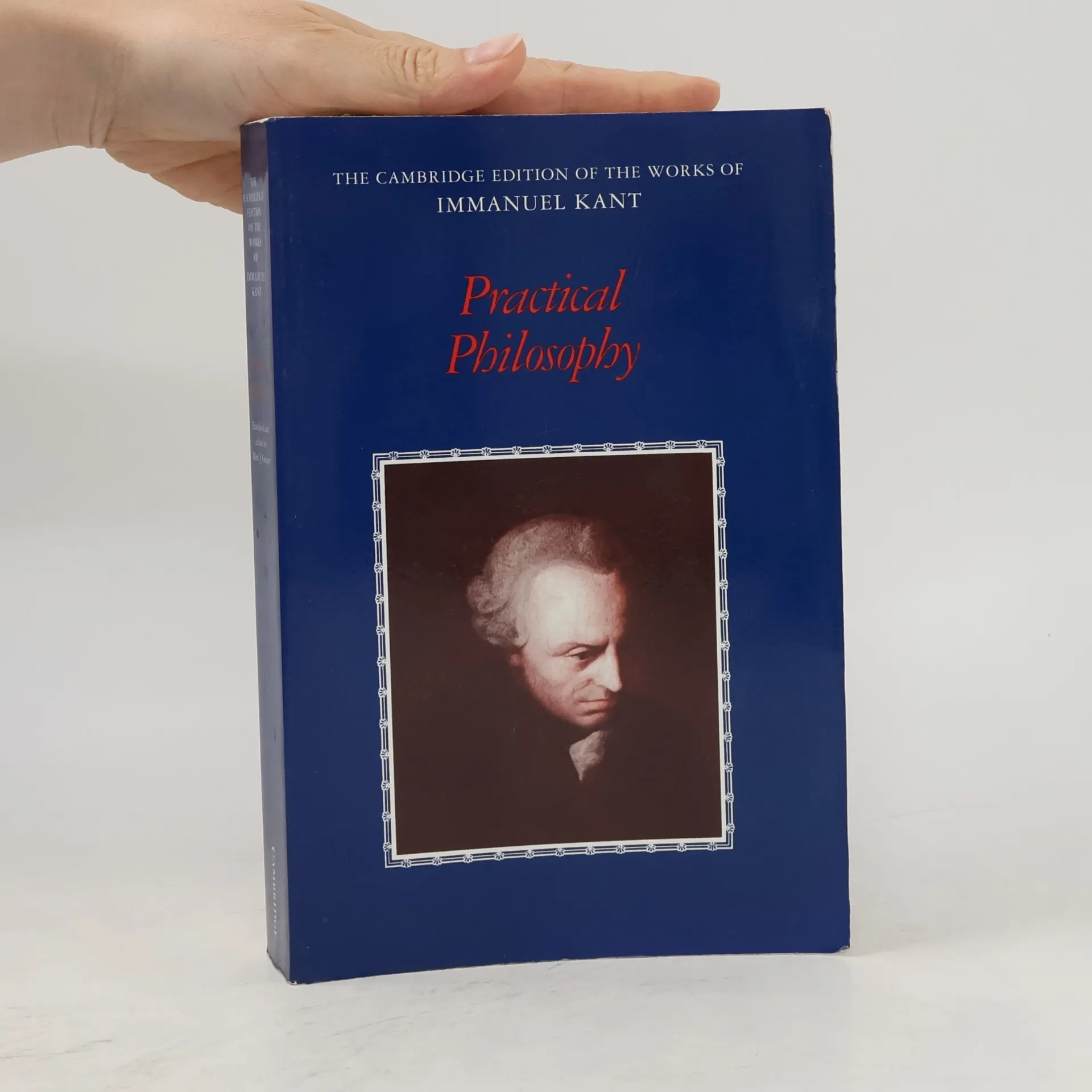
This volume presents the first complete English translation of Kant's writings on moral and political philosophy, offering readers a comprehensive insight into his ethical theories and political ideas. It serves as an essential resource for understanding Kant's profound influence on modern thought, exploring themes such as autonomy, justice, and the nature of moral obligation. The collection is invaluable for scholars, students, and anyone interested in the foundations of contemporary philosophy and political theory.
La Critica della ragione pratica, seconda delle Critiche kantiane, fu pubblicata nel 1788. Kant si propone di rispondere alla domanda «che cosa debbo fare?», parallela alla sua precedente indagine su «che cosa posso conoscere?». Il suo obiettivo è fornire una chiara rappresentazione del principio della moralità, che appartiene alla coscienza comune, ma spesso non è consapevole di sé e non può giustificarsi se messa in discussione. Kant stabilisce le condizioni affinché il nostro agire possa essere considerato "morale", analogamente a come nella Critica della ragione pura ha definito le condizioni di validità del conoscere. Durante questo percorso, affronta anche questioni metafisiche riguardanti libertà, anima, immortalità e Dio. Concetti come l'universalizzabilità della massima e l'umanità come fine, mai come mezzo, diventano criteri morali che influenzano il dibattito contemporaneo. Questa traduzione si distingue per la sua aderenza all'originale, con innovazioni lessicali e sintattiche che facilitano l'accesso al testo tedesco. Un ampio apparato di note, un indice dei termini significativi e un'introduzione dettagliata rendono questa edizione un commento esteso all'opera kantiana.
Immanuel Kants Hauptwerk, die ›Kritik der reinen Vernunft‹, gehört nicht nur zu den großen Klassikern philosophischer Literatur, sondern ist ohne Zweifel auch eines der wirkmächtigsten in der Geschichte der Philosophie. Nichtsdestoweniger ist es schwer zugänglich und ohne fundierte philosophische Kenntnisse kaum zu verstehen. In dem hier vorliegenden Buch wurde daher der Versuch unternommen, die wesentlichen Stränge dieser so fundamentalen Weltdeutung, als einen Grundriss derselben, herauszuarbeiten und auf diese Weise in das intellektuelle Vermächtnis Kants einzuführen.
„Es ist so bequem, unmündig zu sein“ - Kant war nah am Leben. In diesem Band erscheint er neu: als verlässlicher Weggefährte durch die Fährnisse eines unvernünftigen Alltags, als Ratgeber bei Fragen der Moral, des Anstands und des Urteilens, als Menschenkenner ohne Scheuklappen.
Le concept de grandeur negative, depuis longtemps en usage dans les mathematiques, s'y est revele d'une extreme importance. Toutefois la representation que s'en sont fait la plupart, et l'explication qu'ils en donnaient, est etrange et contradictoire, bien qu'aucune inexactitude n'en ait rejailli sur l'application, car les regles particulieres ont pris la place de la definition et en ont assure l'usage.[...] Entreprenant de gagner a la philosophie un concept encore inemploye, quoique absolument necessaire, je me souhaite pour juges des esprits aussi penetrants que celui qui inspira cet essai.
Band 5 enthält "Die Religion innerhalb der Grenzen der bloßen Vernunft" und "Die etaphysik der Sitten", Kants drittes und letztes ethisches Werk. In seiner religionsphilosophischen Schrift setzt Kant seinen in den "Kritiken" entwickelten ethisch-theologischen Gottesbegriff zum christlichen Offenbarungsglauben in Beziehung und unterzieht verschiedene kirchliche Lehrstücke einer kritischen Prüfung. Dabei geht es ihm immer darum, den moraltheologischen Geist des "reinen Religionsglaubens" gegenüber dem Buchstaben des "Kirchenglabens" ins Licht zu setzen
Kants" Metaphysische Anfangsgründe der Naturwissenschaft" von 1786 stehen ihrem Anspruch nach zwischen einer transzendentalen Kritik der Vernunft - Kant bereitete zur selben Zeit die in wesentlichen Stücken umgearbeitete zweite Auflage der KrV vor - und der Physik als empirischer Wissenschaft. Die Notwendigkeit einer Reflexion über die Naturwissenschaft verhilft dieser Schrift heute wieder zu systematischer Relevanz, nachdem sie lange Zeit nur aus dem Blickwinkel ihrer Bedeutsamkeit für die empirische Naturwissenschaft betrachtet und infolgedessen allenfalls aus wissenschaftshistorischem Interesse rezipiert wurde.
Mit seiner Kritik der reinen Vernunft hat Kant die Philosophie auf neue Grundlagen gestellt. Aber auch seine kleine Schrift »Beantwortung der Frage: Was ist Aufklärung?« aus dem Jahr 1784 wirkt bis heute nach. Neben dieser Schrift umfasst der Band vier weitere kurze Texte: »Was heißt: Sich im Denken orientieren?«, »Das Ende aller Dinge« (über den Übergang vom Leben zum Tod), »Das Misslingen aller philosophischen Versuche in der Theodizee« (also des Versuches einer Erklärung, warum es Leid auf dieser Welt gibt), sowie »Über ein vermeintes Recht, aus Menschenliebe zu lügen« (ein Recht, das Kant verneint). Fünf Texte, die zu zentralen Fragen des Lebens Orientierung im Denken geben.
Kants Anthropologie (1798) galt lange als eine bloß popularphilosophische Schrift von allenfalls propädeutischem Wert. Dabei erfüllt sich die Leistung der Anthropologie keineswegs nur in einer vorphilosophischen Verständigung über das theoretische und praktische Vermögen des Menschen. Nur die anthropologische Reflexion verleiht Gewißheit, daß der Mensch „sein eigener letzter Zweck ist“. Dies gibt dem Leben seinen Sinn.
Table of Contents - Vorbemerkungen - Die vorkritischen Schriften - Die kritischen Schriften - Die Kritik der reinen theretischen Vernunft - Die Kritik der reinen praktischen Vernunft - Die Krtitk der Urteilskraft - Schlußwort zu den Kritiken - Die Kulturphilosophie - Die Philosophie der Erziehung - Die Geschichtsphilosophie - Das Ende - KAnts Wirkung auf die Nachwelt
Die zentrale Stellung der Tugendlehre (1797), des zweiten Teils der Metaphysik der Sitten, wird innerhalb der Moralphilosophie Kants häufig verkannt. Es zeigt sich jedoch, daß diese späte Schrift den Vorwurf der Kritik, Kants Ethik ende im „Formalismus“ und sei zur Begründung materialer Pflichten nicht fähig, ins Leere laufen läßt.
Der Streit der Facultäten, in drey Abschnitten (Königsberg: Friedrich Nicolovius, 1798), xxx, 205pp. [Ak. 7:5-116] “The Conflict of the Faculties.” Trans. by Mary J. Gregor (NY: Abaris Books, 1979). Trans. by Mary J. Gregor & Rbt Anchor in Immanuel Kant, Religion & Rational Theology, ed. & trans. by Allen W. Wood & George di Giovanni (Cambridge Univ. Press, 2001), pp.239-327. This book was cobbled together from three essays written before this volume's conception, comprising its three sections: The conflict between the philosophy faculty & the (1) theology [7:17-25], (2) law [7:79-94] & (3) medical [7:97-116] faculties. This third essay was also published separately (Cf. Power of the Mind).
Der sechste Band umfasst "Die Religion innerhalb der Grenzen der bloßen Vernunft" und die beiden Teile der "Metaphysik der Sitten": die "Metaphysischen Anfangsgründe der Rechtslehre" sowie die "Metaphysischen Anfangsgründe der Tugendlehre".
Die Metaphysik der Sitten in zwei Teilen (Königsberg: Friedrich Nicolovius, 1797); 2nd edition: 1798. [Ak. 6:205-355, 373-493] “The Metaphysics of Morals.” Translated by Mary J. Gregor in Immanuel Kant, Practical Philosophy, edited by Mary J. Gregor (Cambridge: Cambridge University Press, 1996), pp. 365-603. The two parts were published separately (in January and August, respectively): Metaphysische Anfangsgründe der Rechtslehre (235 pp) and Metaphysische Anfangsgründe der Tugendlehre (190 pp). The following year, apart from a scarcely altered second edition of the Rechtslehre (which does, however, include an appendix that replies to Bouterwek’s review of the Rechtslehre that appeared 18 Feb 1797) Kant also published: Erläuternde Anmerkungen zu den metaphysischen Anfangsgründen der Rechtslehre (Königsberg: Friedrich Nicolovius, 1798), 31 pp. [Ak. 6:356-72]. “Explanatory Notes on the Metaphysical Foundations of the Doctrine of Right.” The Rechtslehre suffered from some textual corruptions at the printers [Mautner 1981]; a reconstruction of the text has been attempted in Bern Ludwig’s recent edition (Hamburg: Meiner Verlag, 1986).
Eine Einführung in die Gedankenwelt des Vaters der modernen Philosophie von Wolfgang Kraus
Immanuel Kant ist nicht nur der größte Philosoph deutscher Sprache, er ist vielleicht der größte Denker aller Zeiten. Wenn man seine Lehre kennenlernt, komme dies – so sagt Schopenhauer – einer zweiten Geburt gleich. Die vorliegende Auswahl vereinigt die schönsten und grundlegendsten Gedanken Kants und erschließt auf einfache Weise das umfangreiche, ohne Vorkenntnisse schwer zugängliche Gesamtwerk.
Beantwortung der Frage: Was ist Aufklarung? ist ein Essay des Philosophen Immanuel Kant aus dem Jahr 1784. In diesem in der Dezember-Nummer der Berlinischen Monatsschrift veroffentlichten Beitrag ging Immanuel Kant auf die Frage des Pfarrers Johann Friedrich Zollner Was ist Aufklarung?" ein, die ein Jahr zuvor in derselben Zeitung erschien. Kant lieferte in diesem Aufsatz seine bis heute klassische Definition der Aufklarung. In der Septemberausgabe der Berlinischen Monatsschrift von 1784 veroffentlichte der Philosoph Moses Mendelssohn als Antwort einen Aufsatz mit dem Titel Ueber die Frage: was heisst aufklaren? Diese Antwort ist in dieser Ausgabe auch enthalten."
Dans Folioplus philosophie, le texte philosophique, associé à une oeuvre d'art qui l'éclaire et le questionne, est suivi d'un dossier organisé en six point : " Les mots du texte " : Histoire, dessein de la nature, insociable sociabilité, cosmopolitisme. " L'oeuvre dans l'histoire des idées " : Une histoire universelle?. " La figure du philosophe " : Le philosophe de Kônigsberg. " Trois questions posées au texte " : Qu'est-ce que l'homme ? Quel sens l'histoire peut-elle avoir pour nous ? Comment le droit peut-il triompher ?. " Groupement de textes " : Le sens de l'événement. " Prolongements ".
De la fondation de l'éthique à l'éthique appliquée : ainsi pourrait-on caractériser le projet de la Métaphysique des mœurs ; La Fondation (1785) part de l'expérience morale telle qu'elle est vécue par la conscience commune jusqu'à ce qui, permettant d'en rendre compte, apparaît comme le " principe ultime de la moralité ", c'est-à-dire l'autonomie de la volonté. Formalisme et rigorisme d'une morale qui, comme le voudrait une légende tenace, serait incapable de se confronter à la contingence des situations ? Rien n'est moins sûr. On trouvera ici, en guise de démenti, l'Introduction à la Métaphysique des mœurs, prélude par lequel Kant entamait, en 1797, une vaste recherche sur l'application de l'exigence morale (Doctrine du droit et Doctrine de la vertu)qui compose le tome II de cette édition. Traduction, introduction, bibliographie et notes par Alain Renaut.
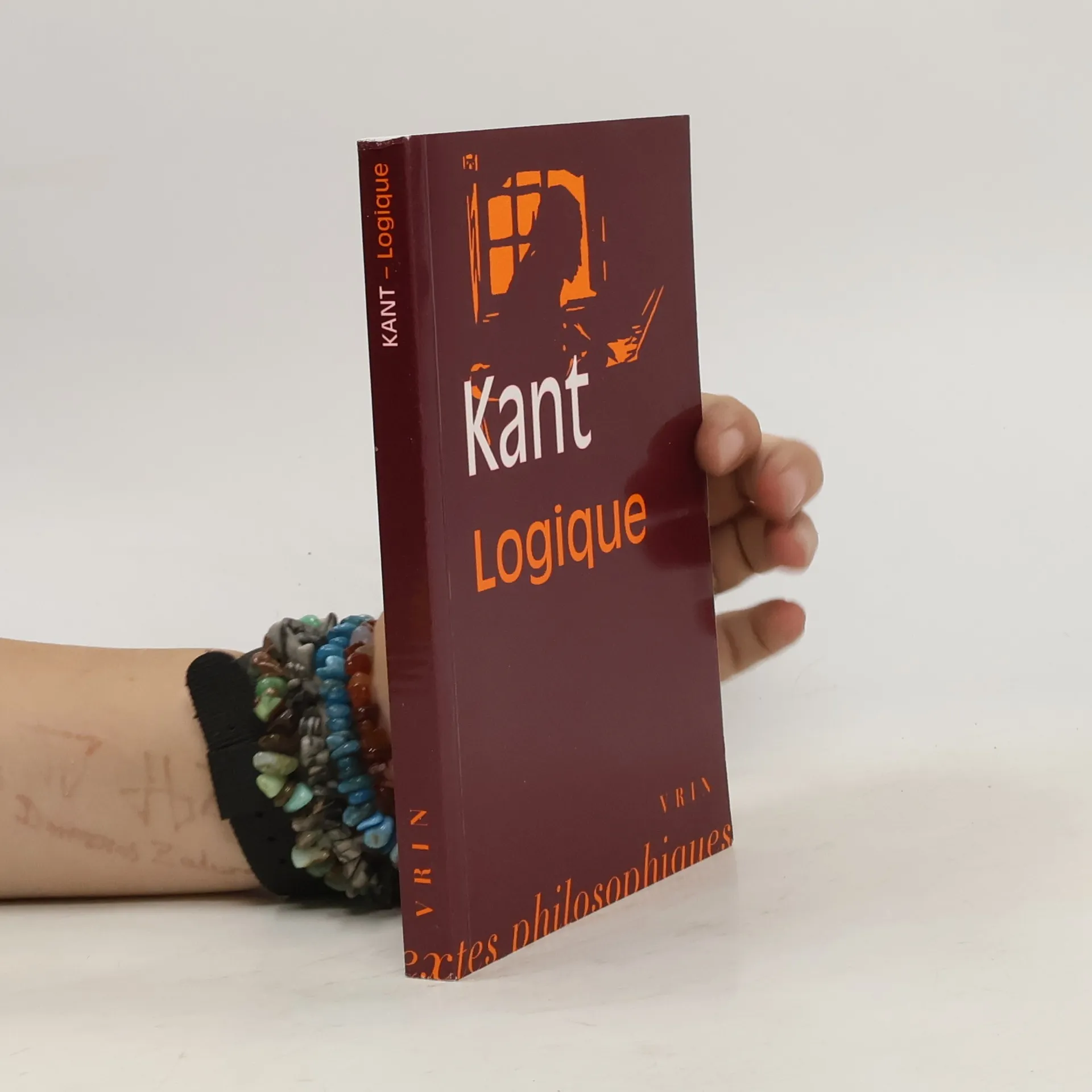
La logique est une science rationnelle non seulement selon la forme, mais selon la matiere; une science a priori des lois necessaires de la pensee, non pas relativement a des objets particuliers, mais bien relativement a tous les objets en general; c'est donc une science du droit usage de l'entendement et de la raison en general, non pas de facon subjective, c'est-a-dire non pas selon des principes empiriques (psychologiques): comment l'entendement pense - mais de facon objective, c'est-a-dire selon des principes a priori: comment il doit penser .
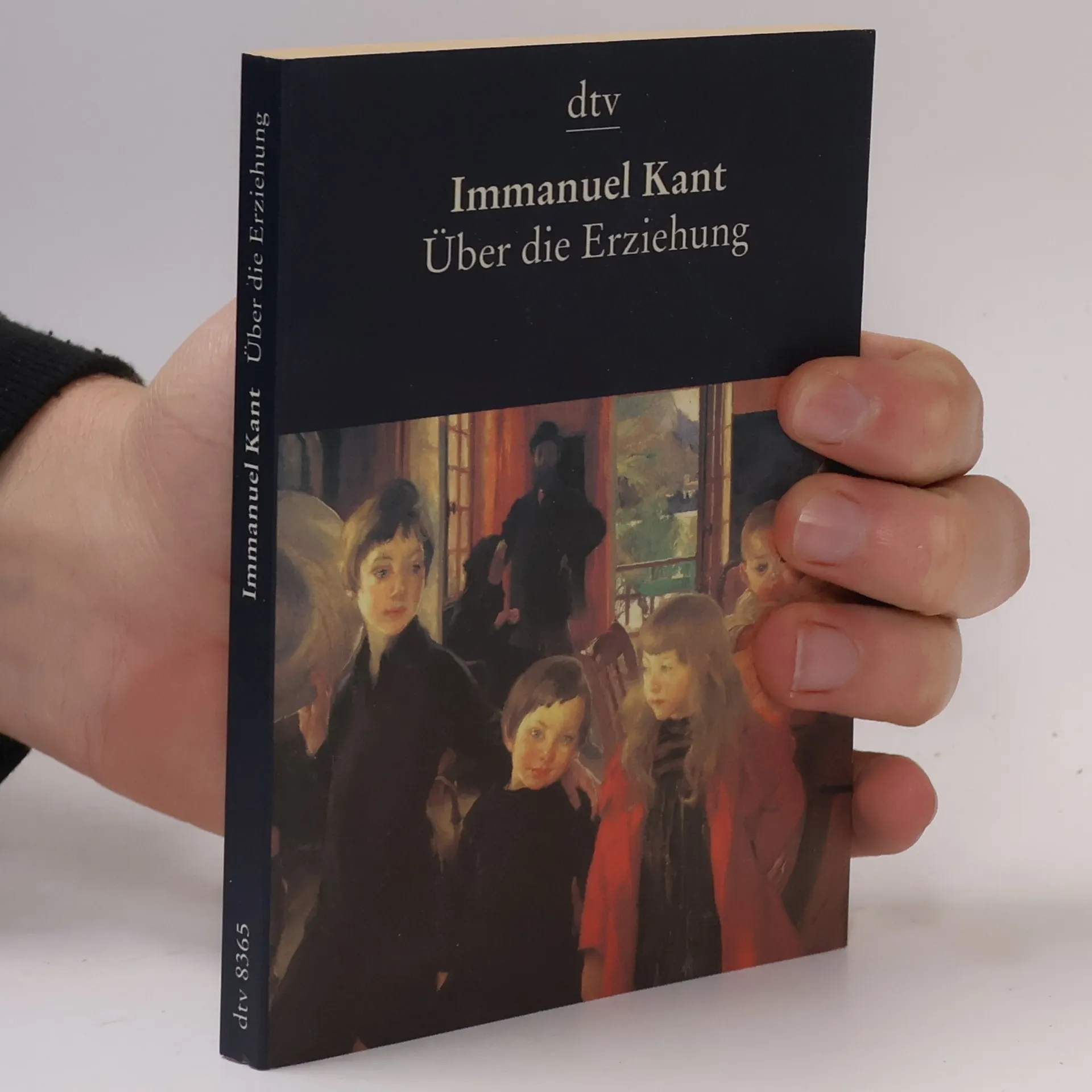
Es ist entzückend sich vorzustellen, daß die menschliche Natur immer besser durch Erziehung werde entwickelt werden, und daß man diese in eine Form bringen kann, die der Menschheit angemessen ist. Dies eröffnet uns den Prospekt zu einem künftigen glücklichen Menschengeschlechte.
Am 12. Februar 2004 jährte sich Immanuel Kants Todestag zum 200sten Mal. Der große Philosoph zeigte in seinen Eingebungen und Formulierungen vielfach Lebensklugheit, stilistische Brillanz und entschieden mehr Humor, als man gemeinhin vermutet. Kant von seiner vergnüglichen Seite - eine originelles Präsent für jeden Freund der Philosophie.
Immanuel Kant ist nicht nur der größte Philosoph deutscher Sprache, er ist vielleicht der größte Denker aller Zeiten. Wenn man seine Lehre kennenlernt, komme dies - so sagt Schopenhauer - einer zweiten Geburt gleich. Die vorliegende Auswahl vereinigt die schönsten und grundlegendsten Gedanken Kants und erschließt auf einfache Weise das umfangreiche, ohne Vorkenntnisse schwer zugängliche Gesamtwerk.
"Wahrheitsgetreuer Bericht über meine Reise in den Himmel" ist ein hochwertiger Nachdruck der Originalausgabe von 1877. Hansebooks widmet sich der Erhaltung historischer Literatur und bietet Werke zu verschiedenen Themen, um selten gewordene Texte und das historische Wissen für die Zukunft zu bewahren.
Both first editions in hardcover with dust jacket. Illustrations, notes, bibligraphy, index. Both volumes have a discard stamp on top edge, no other marks of any kind. Jackets have light rubbing. Near Fine/Near Fine.