

How can developing countries grow their economies? Most discussions focus on what wealthier nations should do for them. Justin Yifu Lin, the first non-Western chief economist of the World Bank, emphasizes self-help strategies for developing nations. Since World War II, various economic growth prescriptions have emerged, often driven by ideology rather than practicality, resulting in mixed outcomes. Lin draws on historical lessons and economic analysis to explore how successful countries have developed their economies. He argues that economic development relies on continuous technological innovation, industrial upgrading, and structural change, driven by effective utilization of land, labor, capital, and infrastructure. Nations should identify and nurture industries where they hold a comparative advantage and use these sectors as a foundation for growth. Additionally, governments must recognize the importance of markets, limiting their role to allow firms to thrive and lead innovation. By adopting this "new structural economics" framework, even the poorest countries can achieve sustained growth of eight percent or more, significantly reduce poverty, and transition to middle- or high-income status within a generation or two. Lin’s insights, drawn from his experiences at the World Bank and reflections on China's rise, offer a hopeful roadmap for nations pursuing prosperity.
Justin Yifu Lin Pořadí knih (chronologicky)
Justin Yifu Lin je čínský ekonom a bývalý hlavní ekonom a vyšší viceprezident Světové banky.

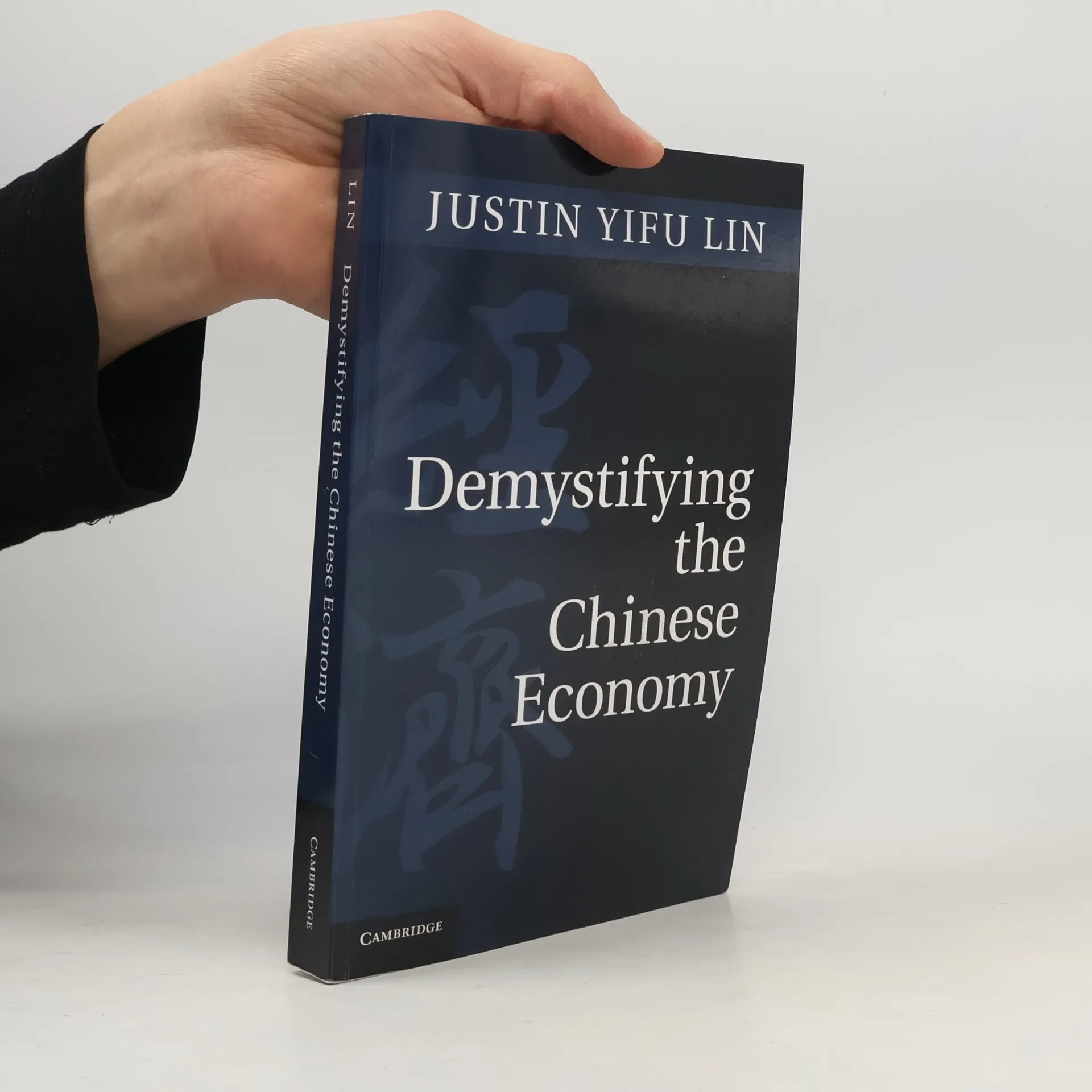
Demystifying the Chinese Economy
- 330 stránek
- 12 hodin čtení
China was the largest and one of most advanced economies in the world before the eighteenth century, yet declined precipitately thereafter and degenerated into one of the world's poorest economies by the late nineteenth century. Despite generations' efforts for national rejuvenation, China did not reverse its fate until it introduced market-oriented reforms in 1979. Since then it has been the most dynamic economy in the world and is likely to regain its position as the world's largest economy before 2030. Based on economic analysis and personal reflection on policy debates, Justin Yifu Lin provides insightful answers to why China was so advanced in premodern times, what caused it to become so poor for almost two centuries, how it grew into a market economy, where its potential is for continuing dynamic growth and what further reforms are needed to complete the transition to a well-functioning, advanced market economy.