

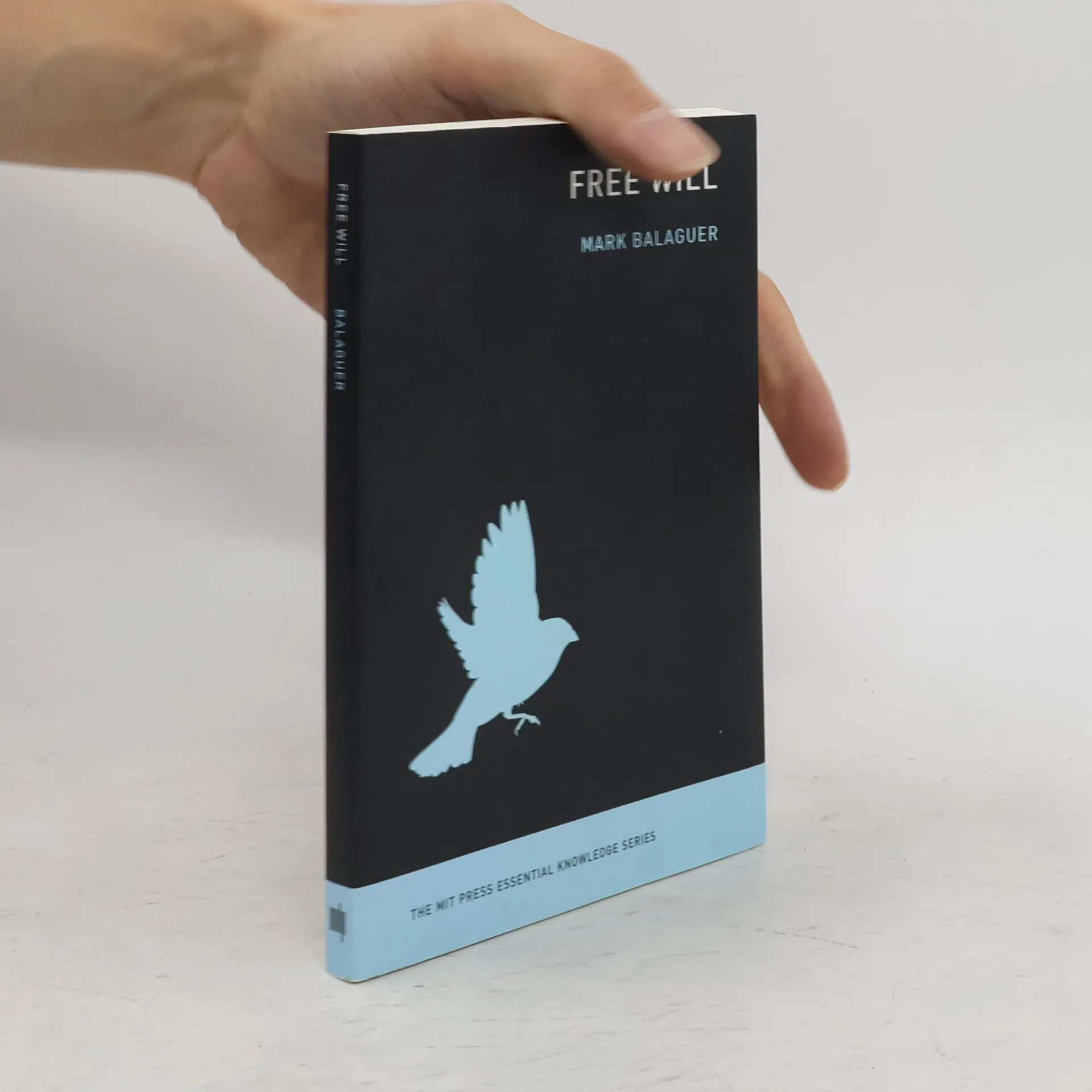
Free Will
- 152 stránek
- 6 hodin čtení
In daily life, it appears we have free will, making conscious decisions that guide our actions, such as getting up from the couch or choosing to eat chocolate ice cream. However, some argue that free will is an illusion, citing neuroscientist Sam Harris and psychologist Daniel Wegner, who claim scientific findings disprove its existence. In this engaging volume, philosopher Mark Balaguer explores arguments and experiments suggesting humans lack free will, finding them overstated and misguided. He discusses determinism, the idea that every event is predetermined by prior occurrences, and examines philosophical and scientific arguments against free will, including those based on Benjamin Libet's experiments, which suggest our conscious decisions follow neural events. Balaguer also considers various religious and philosophical perspectives, including compatibilism, which supports a pro-free-will stance. Ultimately, he argues that the anti-free-will claims from philosophers, psychologists, and neuroscientists fail to provide sufficient reason to doubt free will's existence. However, he notes that this does not confirm we possess free will, leaving the question open as our understanding of the brain remains incomplete.