

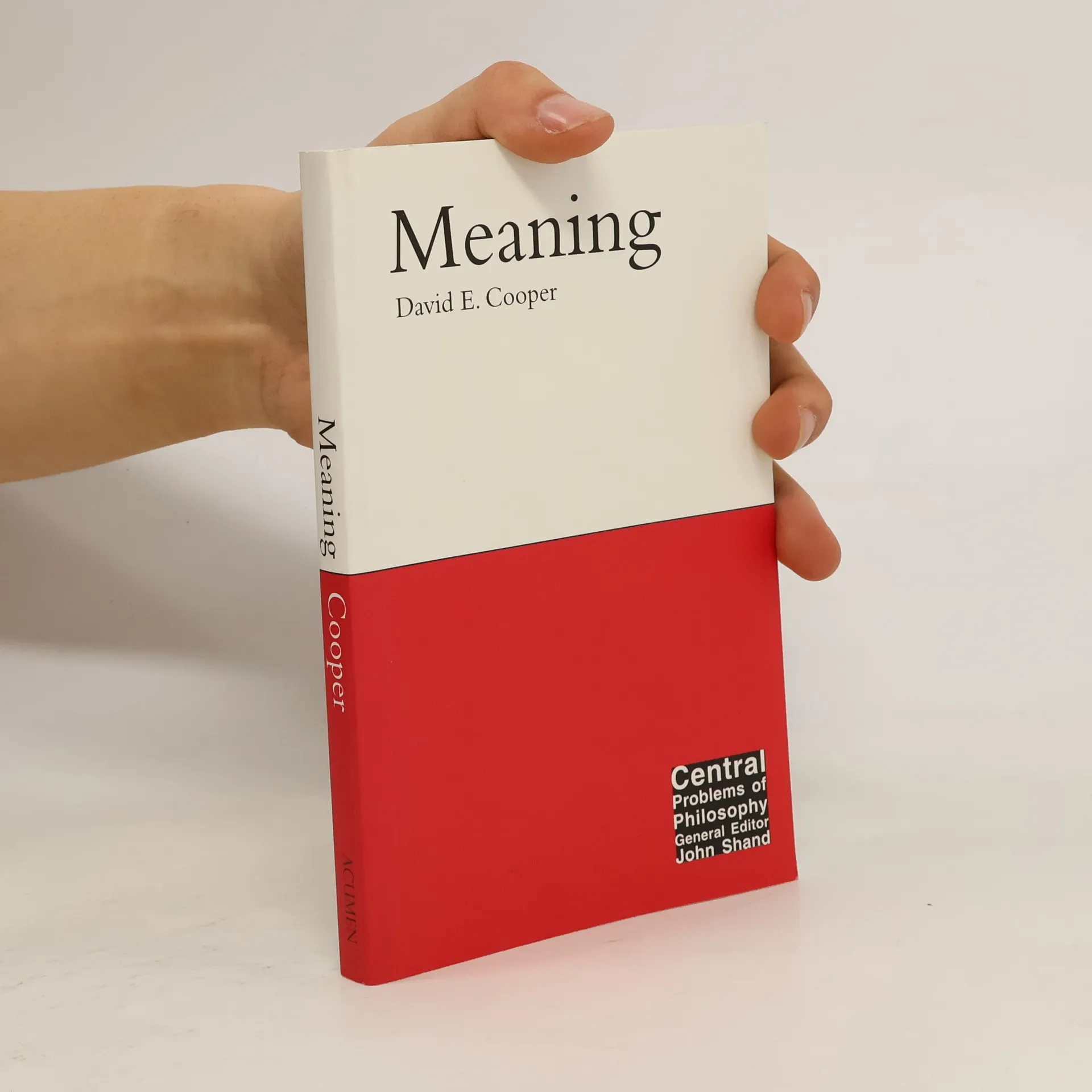
Meaning is one of our most central and most ubiquitous concepts. Anything at all may, in suitable contexts, have meaning ascribed to it. In this wide-ranging book, David Cooper departs from the usual focus on linguistic meaning to discuss how works of art, ceremony, social action, bodily gesture, and the purpose of life can all be meaningful. He argues that the notion of meaning is best approached by considering what we accept as explanations of meaning in everyday practice and shows that in these situations we are explaining the appropriate fit of an item - whether a word or an artwork - with something larger than or outside of itself. This fuller account of meaning explores questions of the meaning of meaning and tackles issues such as whether meaning is just a misleading 'folk' term for something more basic, whether there really is meaning at all, and whether we should strive for meaning or let our lives 'just be' rather than mean. By taking the problem of meaning out of the technical philosophy of language and providing a more general account, Cooper is able to offer new insights into the import, function, and status of meaning that will be of interest not only to philosophers of language but to students and philosophers working in areas such as epistemology and metaphysics.
David E. Cooper Knihy

The book delves into the concept that reality, existing beyond human perspectives, is fundamentally indescribable and remains a 'mystery.' David Cooper critiques alternative views that fail to align with the human experience, advocating for a philosophical understanding that embraces mystery as essential. By doing so, he emphasizes how this appreciation shapes our beliefs and actions, restoring a vital element to philosophical discourse.
Pessimism, Quietism and Nature as Refuge
- 168 stránek
- 6 hodin čtení
The book explores the challenge of living with a pessimistic and misanthropic worldview, questioning how individuals can find meaning and happiness in a seemingly unchangeable human condition. Cooper advocates for a quietist approach, suggesting that true wellbeing can be achieved by seeking solace in nature, away from the complexities and disappointments of everyday life. This perspective encourages readers to reconsider their relationship with the world and find peace in the natural environment.
A Philosophy of Gardens
- 184 stránek
- 7 hodin čtení
Exploring the deep connection between gardens and humanity, this book offers intriguing perspectives on the role of gardens in our lives. It delves into their cultural, emotional, and psychological significance, revealing how they shape our experiences and foster a sense of belonging. Through various insights, the narrative highlights the transformative power of gardens, making it a compelling read for nature lovers and those interested in the human experience.