

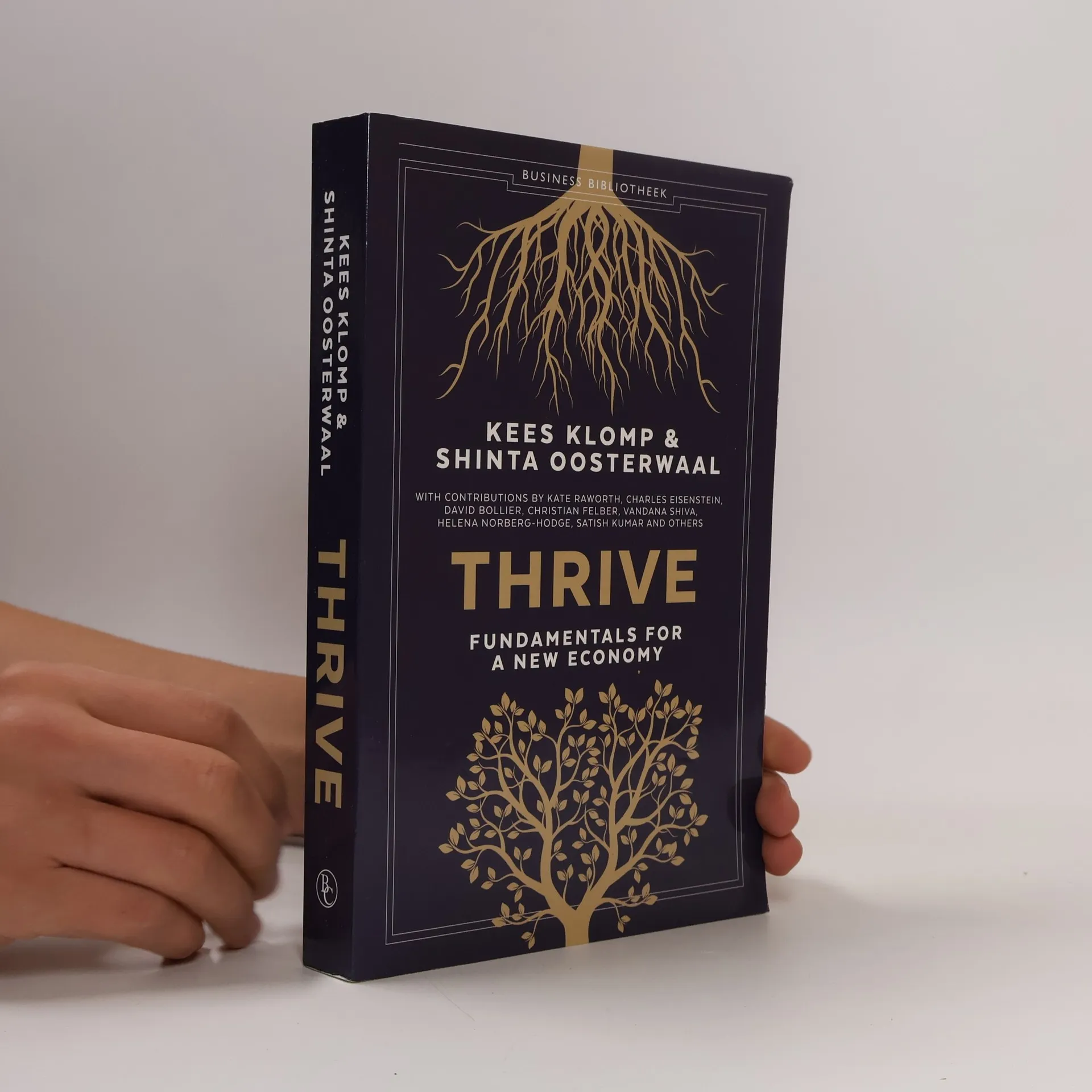
In 'Thrive. Fundamentals for a New Economy', Kees Klomp and Shinta Oosterwaal provide insights into alternative approaches to economics that are sustainable and just for both society and the planet in the long term. In twenty-four essays, internationally renowned economic thinkers like Kate Raworth, Charles Eisenstein, Clair Brown, Helena Norberg-Hodge and Daniel C. Wahl, share the alternatives that are available to us, such as doughnut economics, wellbeing economics, common good economics, regenerative economics, buddhist economics, commons economics, local economics, bioregional economics, indigenous economics and degrowth economics. Each of these approaches provides a realistic and enticing vision of a thriving future. ‘Thrive’ offers readers the fundamentals for a new economy that is rooted in the well-being of humanity and of our planet. This book is a must-read for anyone in search of economic perspectives that contribute to a flourishing world.
David Bollier Knihy



The book explores the implications of intellectual property and ownership in modern society, highlighting various controversial cases. It addresses the monopoly on federal court decisions by a Minnesota publisher, a Texas company's patent on traditional Indian rice, and claims over mathematical algorithms in software. Additionally, it discusses the commercialization of public lands and the ownership of icebergs for fresh water. Through these examples, the narrative raises critical questions about the boundaries of property rights and the impact on culture and innovation.
Viral Spiral
- 344 stránek
- 13 hodin čtení
Mierzyć wyżej
Historie 25 firm, które osiągnęły sukces, łącząc skutecznie zarządzanie z realizacją misji społecznych
- 298 stránek
- 11 hodin čtení