




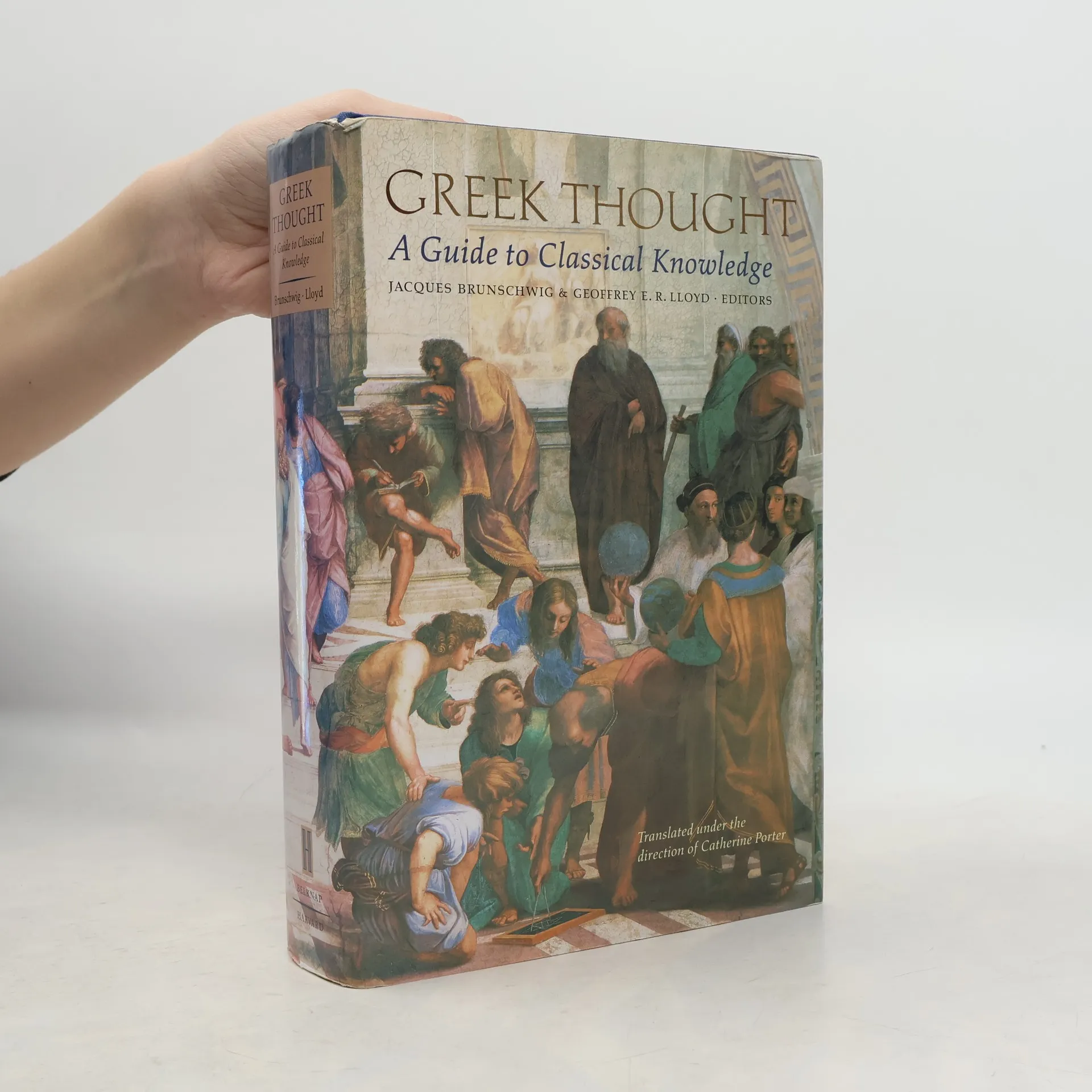
Harvard University Press Reference Library: Greek Thought
A Guide to Classical Knowledge
- 1056 stránek
- 37 hodin čtení
Ancient Greek thought serves as a foundational source for Western intellectual, ethical, and political civilization, influencing contemporary reflections. This volume features over sixty essays by international scholars, examining the scope of Greek thought, including their knowledge, beliefs, inventions, and understanding of knowledge itself. It highlights the reflexivity inherent in Greek thought, reminding us of our intellectual debts to them. Divided into sections on philosophy, politics, the pursuit of knowledge, major thinkers, and schools of thought, the work illustrates how the Greeks engaged in self-examination, defining the frameworks for understanding life, language, production, and action. The authors focus not just on historical facts but on the narratives the Greeks created about their history, their poetic expressions, and rhetorical practices. Essays cover a range of topics, from political and philosophical ideas to specific fields like Astronomy, History, Mathematics, and Medicine. They provide fresh insights on key figures from Anaxagoras to Zeno of Elea and explore core traditions from the Milesians to various interpretations of Platonism. Collectively, these contributions reflect the Greeks' insatiable thirst for knowledge, a trait Aristotle deemed universal among humans. Accompanied by thirty-two pages of color illustrations, this work captures the richness and dynamism of the Greek intellectual journey