

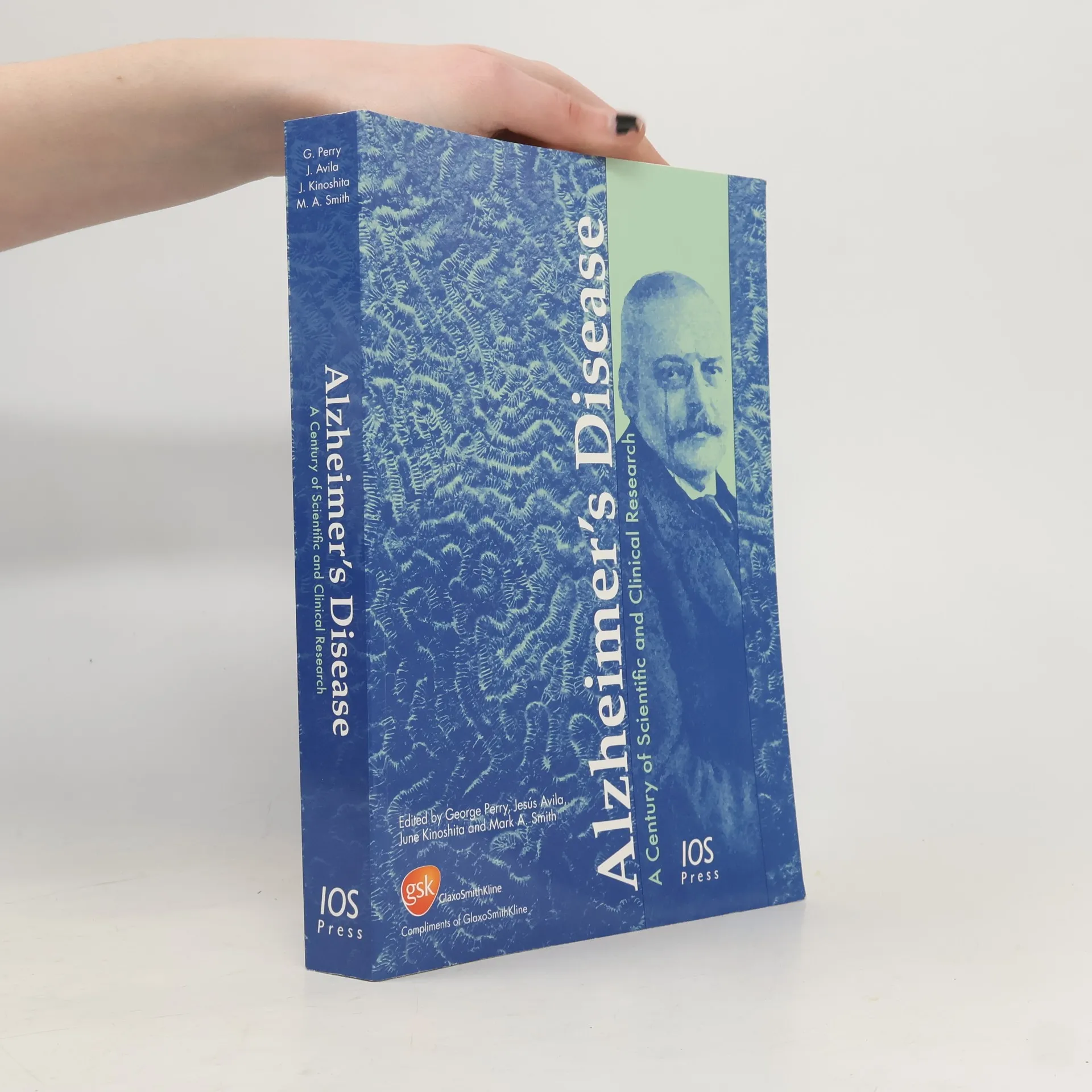
This publication is a landmark work commemorating the centennial of Alois Alzheimer's discovery of what would be known as Alzheimer's disease (AD). The centennial of Alois Alzheimer s original description of the disease that would come to bear his name offers a vantage point from which to commemorate the seminal discoveries in the field. It traces how the true importance of AD as the major cause of late life dementia ultimately came to light and narrates the evolution of the concepts related to AD throughout the years and its recognition as a major public health problem, with an estimated 30-40 million people affected by AD today. To identify the breakthroughs, the editors have used citation analysis, landmark papers identified by current researchers, and drew upon their own experience and insights. This process took into account the perspectives of individuals who recall the impact of findings at the time they were made, as well as of scientists today who have the advantage of hindsight in weighing the lasting influence of these findings. Because modern AD research was triggered by the seminal work of Tomlinson, Blessed, and Roth some four decades ago, it is particularly fortunate that the vast majority of these milestone authors are still with us.
June Kinoshita Pořadí knih (chronologicky)

When friends ask for recommendations in Japan, I inquire about their interests. Some immerse themselves in the Kabuki theater in Tokyo, while others explore Tohoku's culinary delights. Tokyo's vibrant energy attracts many, but some prefer the serenity of Kyoto, a symbol of traditional culture. This book is structured to simplify the diverse cultural and geographic offerings. The first section, History and Culture, delves into significant historical periods and key figures, with their names highlighted throughout. It provides an overview and practical references on various topics, including cuisine, which features bilingual menus for restaurant orders and concludes with recommendations. The second section, Japan by Region, organizes ten regional chapters from north to south, covering Honshu, Shikoku, Hokkaido, Kyushu, and the Okinawan archipelago. Each chapter includes an introduction, top attractions, special interests, and seasonal events. Transit diagrams at the start of each chapter illustrate main train lines and side routes, with junctions and stations numbered for easy navigation. For instance, to visit Dewa Sanzan, refer to the Tohoku transit diagram and follow the outlined route. Dining and lodging options are listed for each locale, complete with area codes and a number-key system on local maps. Establishments are rated on a one to three-star scale based on quality, service, and atmosphere, with credit card informat