

This best selling, easy to read book offers the most complete discussion on the theories and principles behind today s most advanced communications systems. Throughout, Haykin emphasizes the statistical underpinnings of communication theory in a complete and detailed manner. Readers are guided though topics ranging from pulse modulation and passband digital transmission to random processes and error control coding. The fifth edition has also been revised to include an extensive treatment of digital communications.
Simon S. Haykin Pořadí knih (chronologicky)
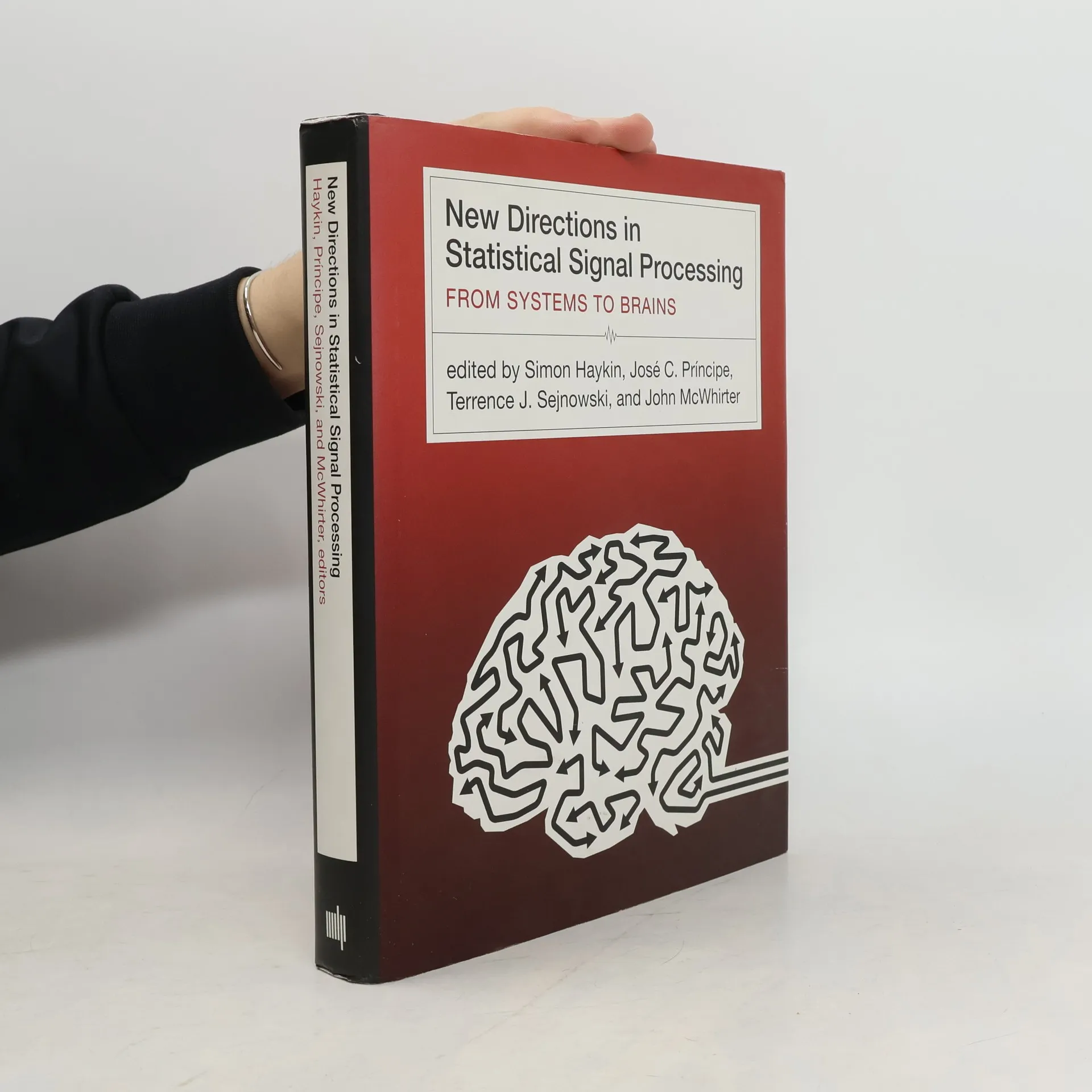
Neural Information Processing: New Directions in Statistical Signal Processing
From Systems to Brains
- 544 stránek
- 20 hodin čtení
Leading researchers in signal processing and neural computation present work aimed at promoting the interaction and cross-fertilization between the two fields. Signal processing and neural computation have separately and significantly influenced many disciplines, but the cross-fertilization of the two fields has begun only recently. Research now shows that each has much to teach the other, as we see highly sophisticated kinds of signal processing and elaborate hierachical levels of neural computation performed side by side in the brain. In New Directions in Statistical Signal Processing, leading researchers from both signal processing and neural computation present new work that aims to promote interaction between the two disciplines. The book's 14 chapters, almost evenly divided between signal processing and neural computation, begin with the brain and move on to communication, signal processing, and learning systems. They examine such topics as how computational models help us understand the brain's information processing, how an intelligent machine could solve the cocktail party problem with active audition in a noisy environment, graphical and network structure modeling approaches, uncertainty in network communications, the geometric approach to blind signal processing, game-theoretic learning algorithms, and observable operator models (OOMs) as an alternative to hidden Markov models (HMMs).