John Horgan píše o vědě, přičemž jeho práce často zkoumá složité vztahy mezi vědeckým poznáním a hlubšími otázkami lidské existence. Své texty publikoval v předních světových médiích a svými eseji vybízí čtenáře k zamyšlení nad hranicemi vědy a jejími dopady na naše chápání světa. Horganova investigativní žurnalistika se zaměřuje na odhalování podstaty vědeckých objevů a jejich důsledků.
Drawing on groundbreaking personal interviews as well as decades of research
from psychologists and others, John Horgan traces the pathways that lead
people into violent extremism and explores what happens to them as their
involvement deepens.
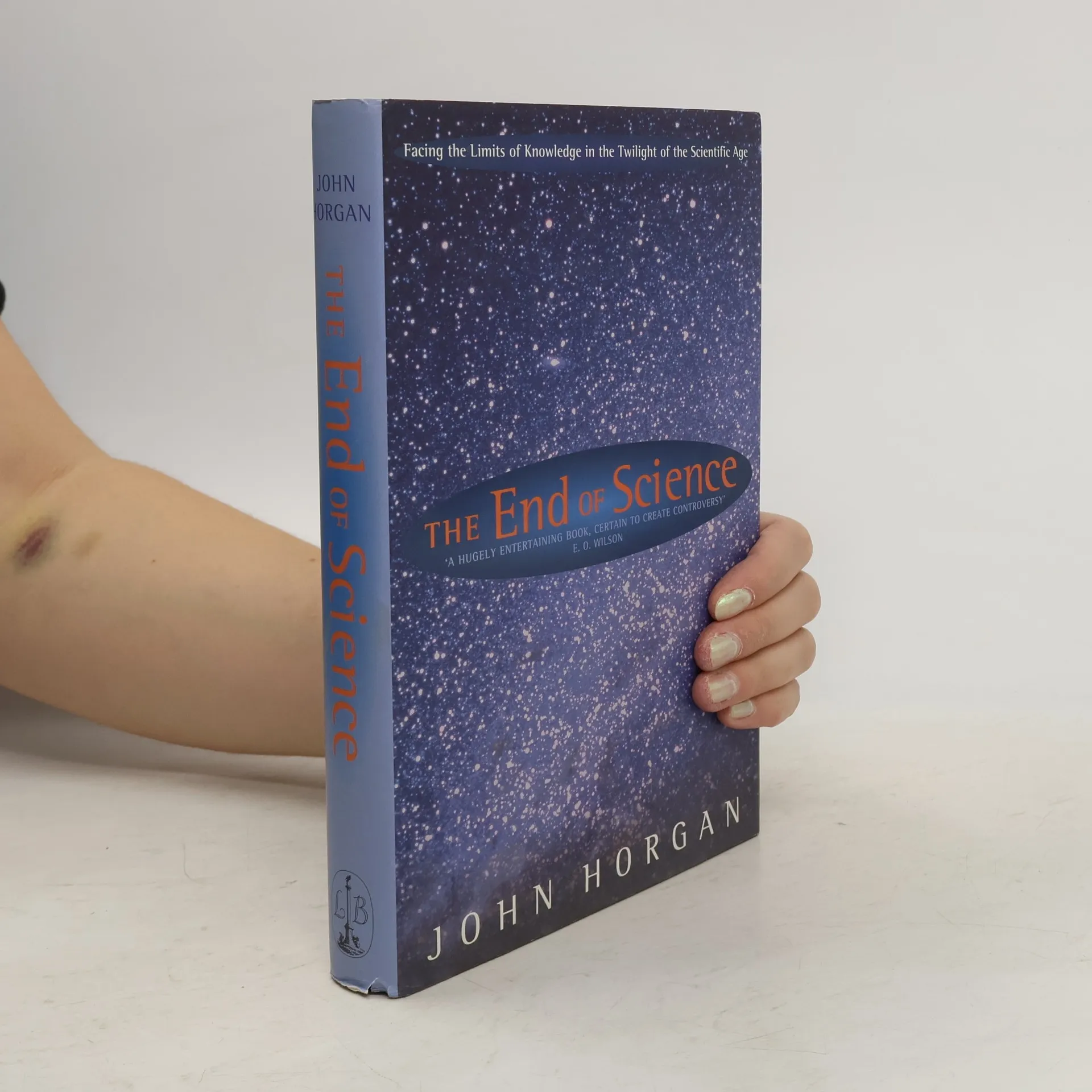
Facing the Limits of Knowledge in the Twilight of the Scientific Age
324 stránek
12 hodin čtení
As a writer for Scientific American, the author is regularly afforded the opportunity of interviewing comtemporary scientists such as Richard Dawkins, Murray Gell-Mann, Stephen Hawking and Noam Chomsky. In this work, he discusses with them whether all the big scientific questions have been answered and all the knowledge worth knowing become known. Will there eventually be a theory of everything that signals the end? In a time where scientific rationality is under fire from many quarters, Horgan provides an overview of current scientific enterprise as he discusses God, Star Trek, superstrings, quarks, consciousness and many other topics.
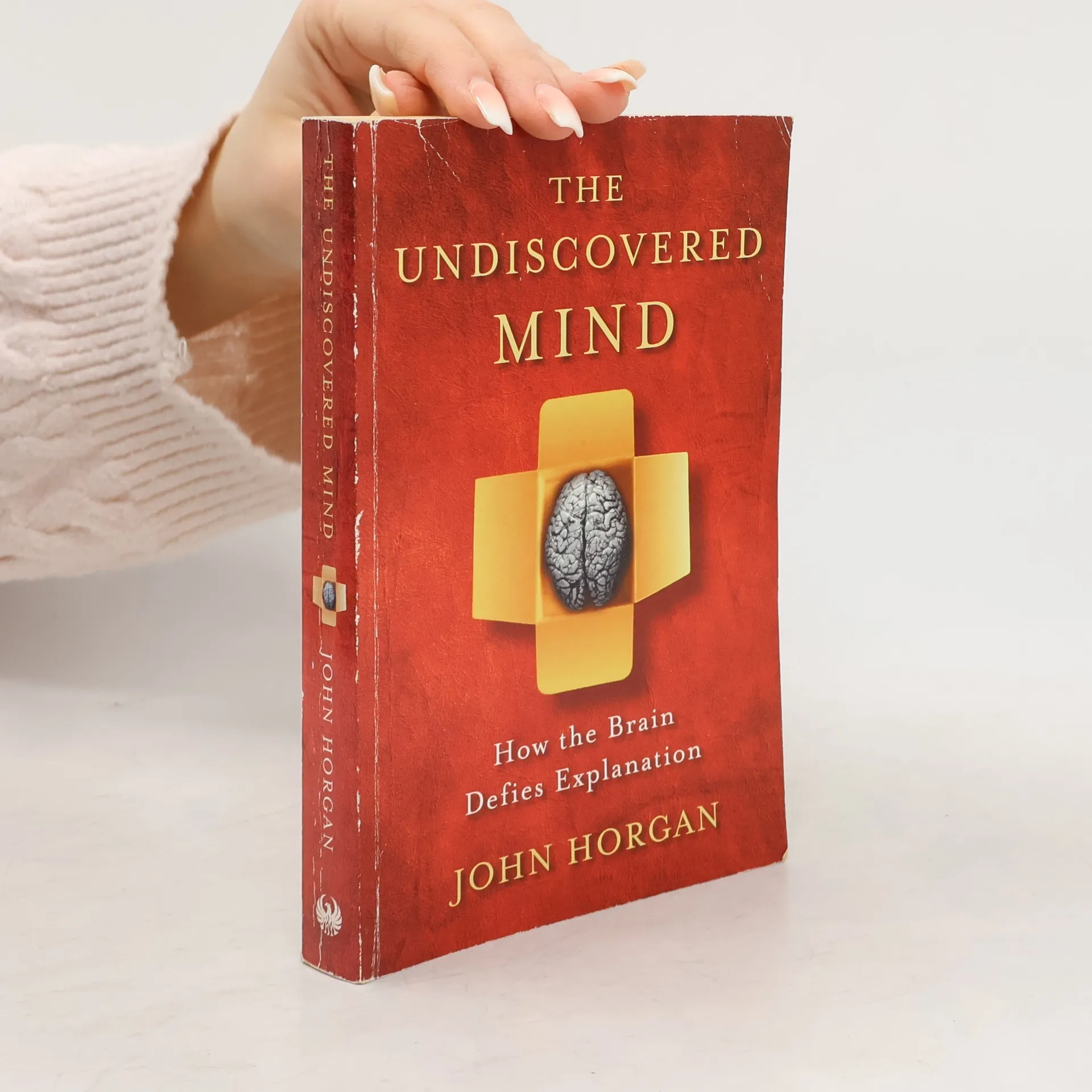
This book takes readers to meet the presumed experts on how the brain works, but demonstrates that we cannot absolutely understand what is happening inside our heads, that science has achieved virtually nothing in explaining the mind and that science cannot define what makes us human.
A day in the inner and outer lives of a college professor, blogger, divorced father, thinker, and yearner. What would it feel like to wake up inside the head of someone who writes about science for a living? John Horgan, acclaimed author of the bestseller The End of Science, answers that question in his genre-bending new book Pay Attention, a stream-of-consciousness account of a day in the life of his alter ego, Eamon Toole—a blogger, college professor, and divorced father. This work of fact-based fiction, or “faction,” follows Toole as he wakes up in his rented apartment in upstate New York, meditates with the mantra “Duh,” commutes via train and subway to an engineering school in New Jersey, teaches a William James essay on consciousness to freshmen, squabbles about Thomas Kuhn with colleagues over lunch, takes a ferry to Manhattan and spends the evening with his bossy, Tarot-reading girlfriend, Emily, on whom he plans to spring a big question. Throughout the day, Toole struggles to be rational while buffeted by fears and yearnings. Thoughts of sex and death keep intruding on his ruminations over quantum spookiness, the neural code, the Singularity and free will. Pay Attention is a profane, profound meditation on the entanglements of our inner and outer worlds and the elusiveness of truth.
Facing the Limits of Knowledge in the Twilight of the Scientific Age - With a New Afterword
322 stránek
12 hodin čtení
As a staff writer for Scientific American, John Horgan has a window on contemporary science unsurpassed in all the world. Who else routinely interviews the likes of Lynn Margulis, Roger Penrose, Francis Crick, Richard Dawkins, Freeman Dyson, Murray Gell-Mann, Stephen Jay Gould, Stephen Hawking, Thomas Kuhn, Chris Langton, Karl Popper, Steven Weinberg, and E. O. Wilson, with the freedom to probe their innermost thoughts? This is the secret fear that Horgan pursues throughout this remarkable book: Have the big questions all been answered? Has all the knowledge worth pursuing become known? Will there be a final theory of everything that signals the end? Is the age of great discoveries behind us? Is science today reduced to mere puzzle solving and adding details to existing theories? Scientists have always set themselves apart from other scholars in the belief that they do not construct the truth, they discover it. Their work is not interpretation but simple revelation of what exists in the empirical universe. But science itself keeps imposing limits on its own power. Special relativity prohibits the transmission of matter or information at speeds faster than that of light; quantum mechanics dictates uncertainty; and chaos theory confirms the impossibility of complete prediction. Meanwhile, the very idea of scientific rationality is under fire from Neo-Luddites, animal-rights activists, religious fundamentalists, and New Agers alike. As Horgan makes clear, perhaps the greatest threat to science may come from losing its special place in the hierarchy of disciplines, being reduced to something more akin to literary criticism as more and more theoreticians engage in the theory twiddling hecalls ironic science. Still, while Horgan offers his critique, grounded in the thinking of the world's leading researchers, he offers homage, too. If science is ending, he maintains, it is only because it has done its work so well.
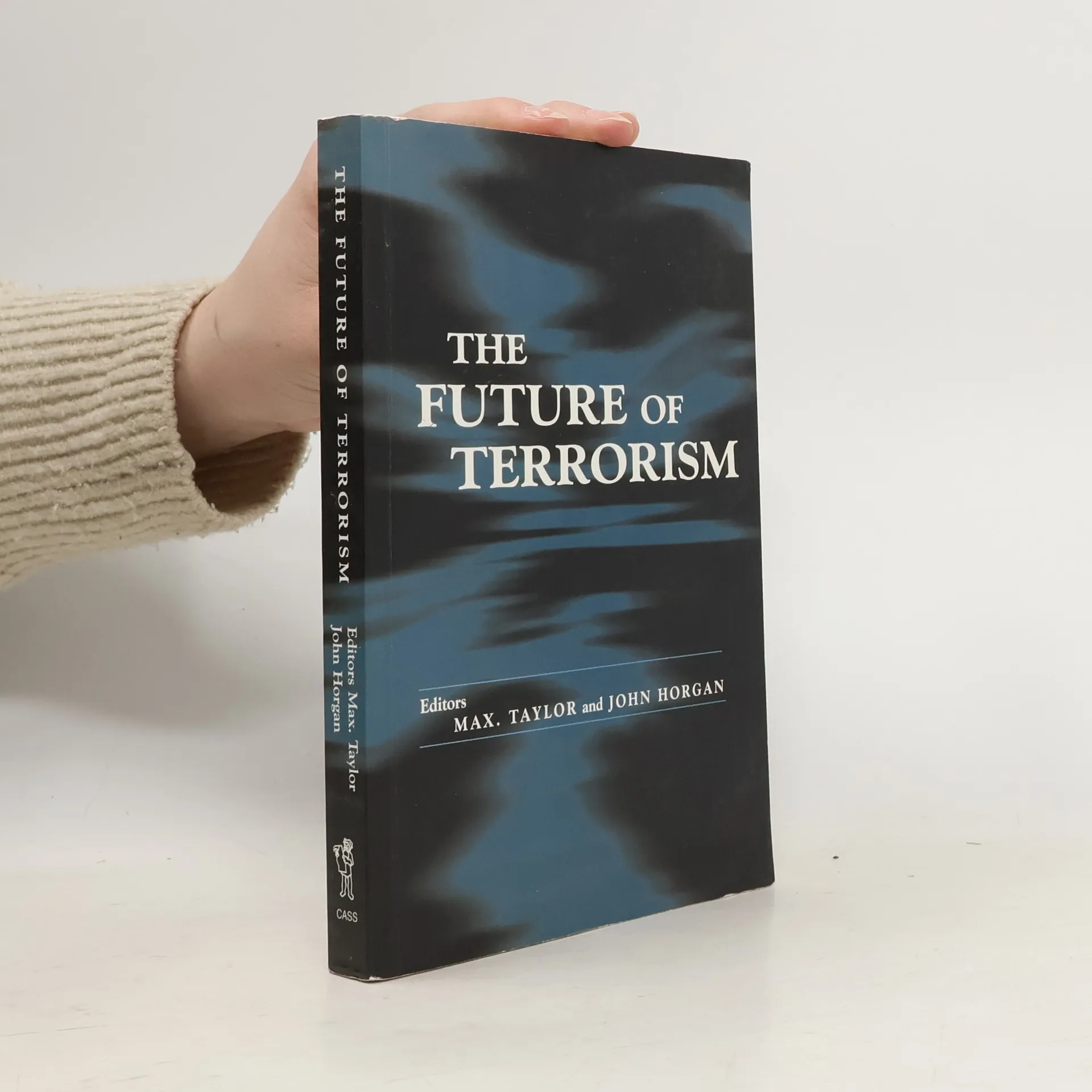
These papers are from a meeting at University College Cork, Ireland, at which terrorism experts from academia and law enforcement presented and dicussed their views on future developments in terrorism.
John Horgan zeigt in seinem neuen Werk, dass unser Verständnis des menschlichen Geistes nach wie vor begrenzt ist. Trotz der Fortschritte in verschiedenen wissenschaftlichen Disziplinen wie Psychologie, Neurologie und Genetik bleibt das Rätsel des Bewusstseins und der Psyche ungelöst. Horgan beleuchtet die Fragen, Methoden und Antworten der einzelnen Fachrichtungen und führt den Leser durch Hörsäle, Krankenhäuser und Laboratorien. Er thematisiert die hochspezialisierten Kenntnisse, die zur Erklärung von Persönlichkeiten und zur Kategorisierung von Geisteskrankheiten verwendet werden. Dennoch bleibt die Erklärung unseres subjektiven Innenlebens unzureichend, wie Horgan feststellt. Sein kenntnisreicher Streifzug durch das Wissen über den menschlichen Geist zeigt, dass die Wissenschaften in diesem Bereich noch am Anfang stehen. Horgan, ein preisgekrönter Wissenschaftsjournalist, hat mit seinem ersten Buch „An den Grenzen des Wissens“ bereits viel Aufsehen erregt. Sein aktuelles Buch ist eine kluge, unterhaltsame und notwendige Auseinandersetzung mit dem großen Rätsel des menschlichen Geistes.
Die letzten Entdecker? Horgans kontrovers diskutiertes Buch porträtiert die führenden Wissenschaftler und Philosophen unserer Zeit - eine informative Einführung in die wichtigsten wissenschaftlichen Entwicklungen der letzten zwanzig Jahre wie in die Einsichten und Ansichten ihrer zentralen Vertreter.
'Wissenschaftsbuch des Jahres 1998'