



Více o knize
Widely read in Europe, the Estonian novelist Jaan Kross is considered one of the most important writers of the Baltic region, and is an often-named candidate for the Nobel Prize. His new historical novel, Professor Martens' Departure, is written in a classic elegaic style reminiscent of Giuseppe di Lampedusa's The Leopard, and it evokes the complex world of czarist Russian society at the turn of the century. The character of Professor Martens is based on all actual official of the czarist reign, a distinguished Estonian jurist curiously reminiscent of Henry Kissinger. Faced with a dire financial crisis in Russia, Professor Martens orchestrates a major loan from the French government to stave off famine; as time passes, however, he realizes that he has managed to perpetuate a brutal regime that keeps its political prisoners in chains. This fictional memoir, written at the end of Martens' life, finds him reliving his past and questioning the degree to which he has sacrificed himself to maintain a corrupt regime, one that ultimately disdains both him and his people. Considered an outsider by the czar's adviser, Martens is nonetheless needed for his skills. Still, he is marginalized and kept in the shadows. Far more than just a political or philosophical novel, Professor Martens' Departure is an astonishing reconstruction of czarist Russia.


Nákup knihy
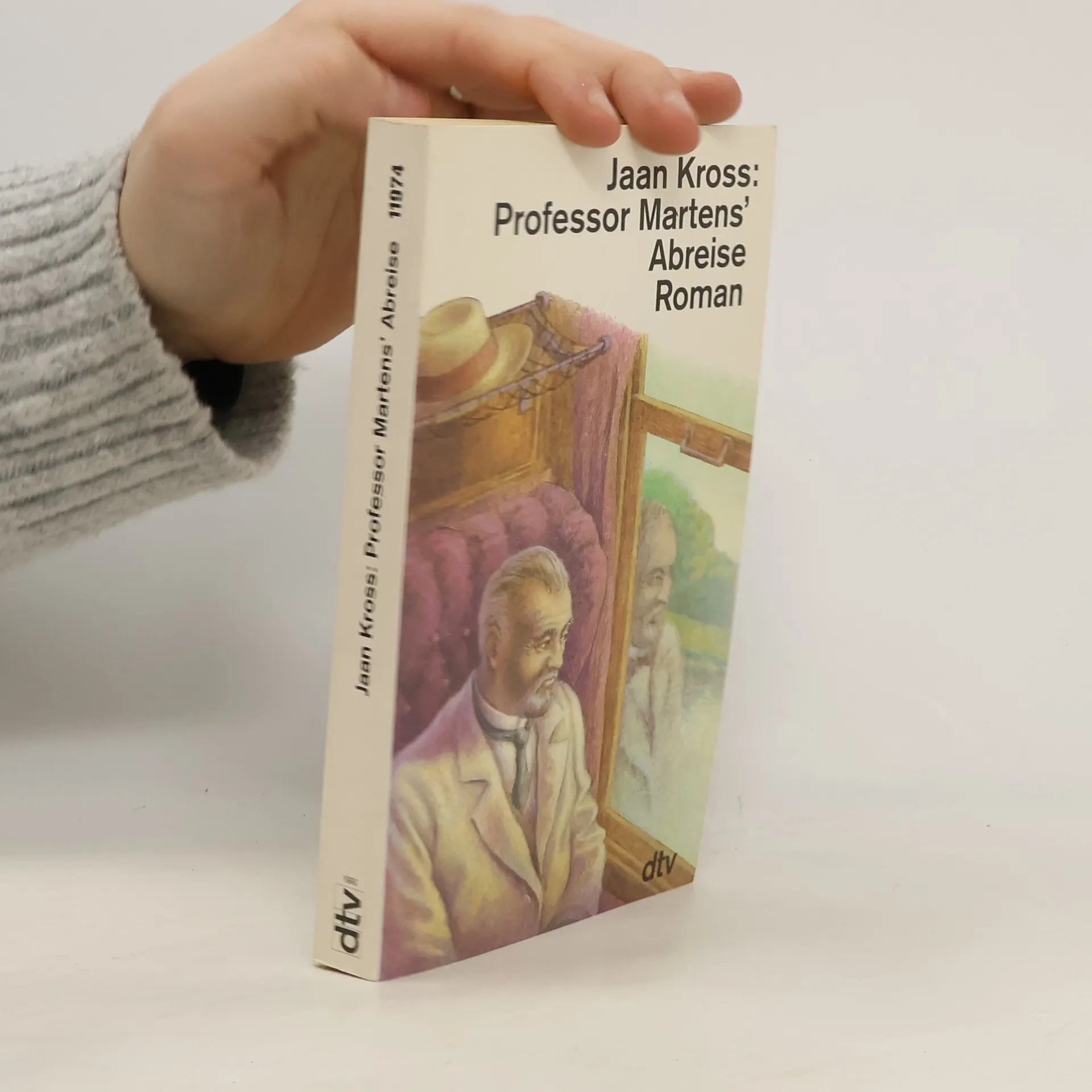
Professor Martens' Abreise, Jaan Kross
- Jazyk

- Rok vydání
- 1994
- product-detail.submit-box.info.binding
- (měkká)
Doručení
Platební metody
Tady nám chybí tvá recenze.
- Podtitul
- Roman
- Jazyk
- německy
- Autoři
- Jaan Kross
- Vydavatel
- dtv Verlagsgesellschaft mbH & Co. KG
- Rok vydání
- 1994
- Vazba
- měkká
- Počet stran
- 335
- ISBN10
- 3423119748
- ISBN13
- 9783423119740
- Série
- Štítky
- Beletrie, Historické romány, Klasika, 20. století, Rusko, Estonsko
- Původní název
- Professor Martensi ärasôit
- Hodnocení
- 3 z 5
- Anotace
- Widely read in Europe, the Estonian novelist Jaan Kross is considered one of the most important writers of the Baltic region, and is an often-named candidate for the Nobel Prize. His new historical novel, Professor Martens' Departure, is written in a classic elegaic style reminiscent of Giuseppe di Lampedusa's The Leopard, and it evokes the complex world of czarist Russian society at the turn of the century. The character of Professor Martens is based on all actual official of the czarist reign, a distinguished Estonian jurist curiously reminiscent of Henry Kissinger. Faced with a dire financial crisis in Russia, Professor Martens orchestrates a major loan from the French government to stave off famine; as time passes, however, he realizes that he has managed to perpetuate a brutal regime that keeps its political prisoners in chains. This fictional memoir, written at the end of Martens' life, finds him reliving his past and questioning the degree to which he has sacrificed himself to maintain a corrupt regime, one that ultimately disdains both him and his people. Considered an outsider by the czar's adviser, Martens is nonetheless needed for his skills. Still, he is marginalized and kept in the shadows. Far more than just a political or philosophical novel, Professor Martens' Departure is an astonishing reconstruction of czarist Russia.