



Více o knize
The police and courts rely on community cooperation to maintain order, yet many urban poor harbor distrust toward law enforcement. This study investigates the perceived legitimacy of legal institutions globally, examining relations between courts, police, and communities in the U.K., Western Europe, South Africa, Slovenia, South America, and Mexico. The authors highlight how social context shapes these relationships. For instance, in Slovenia, the transition to Western-style "community policing" was met with suspicion due to the legacy of Communist control, resulting in limited cooperation from citizens. In Guerrero, Mexico, farmers established an extra-legal policing system to address crime, gaining community support when federal authorities failed to act. The authors also explore how perceptions of legitimacy vary across social groups, noting that attitudes toward police differ significantly in unequal societies like Brazil and Chile. Ethnic minorities often exhibit greater distrust and feel targeted by police discrimination, as evidenced by biases in arrests of foreign-born individuals in Germany. The mutual hostility between police and minority communities can escalate into violence, as seen in the Parisian banlieue riots. The case studies underscore the necessity for law enforcement to consider community needs and attitudes to foster cooperation. This research illuminates the factors influencing the success or failure of
Nákup knihy
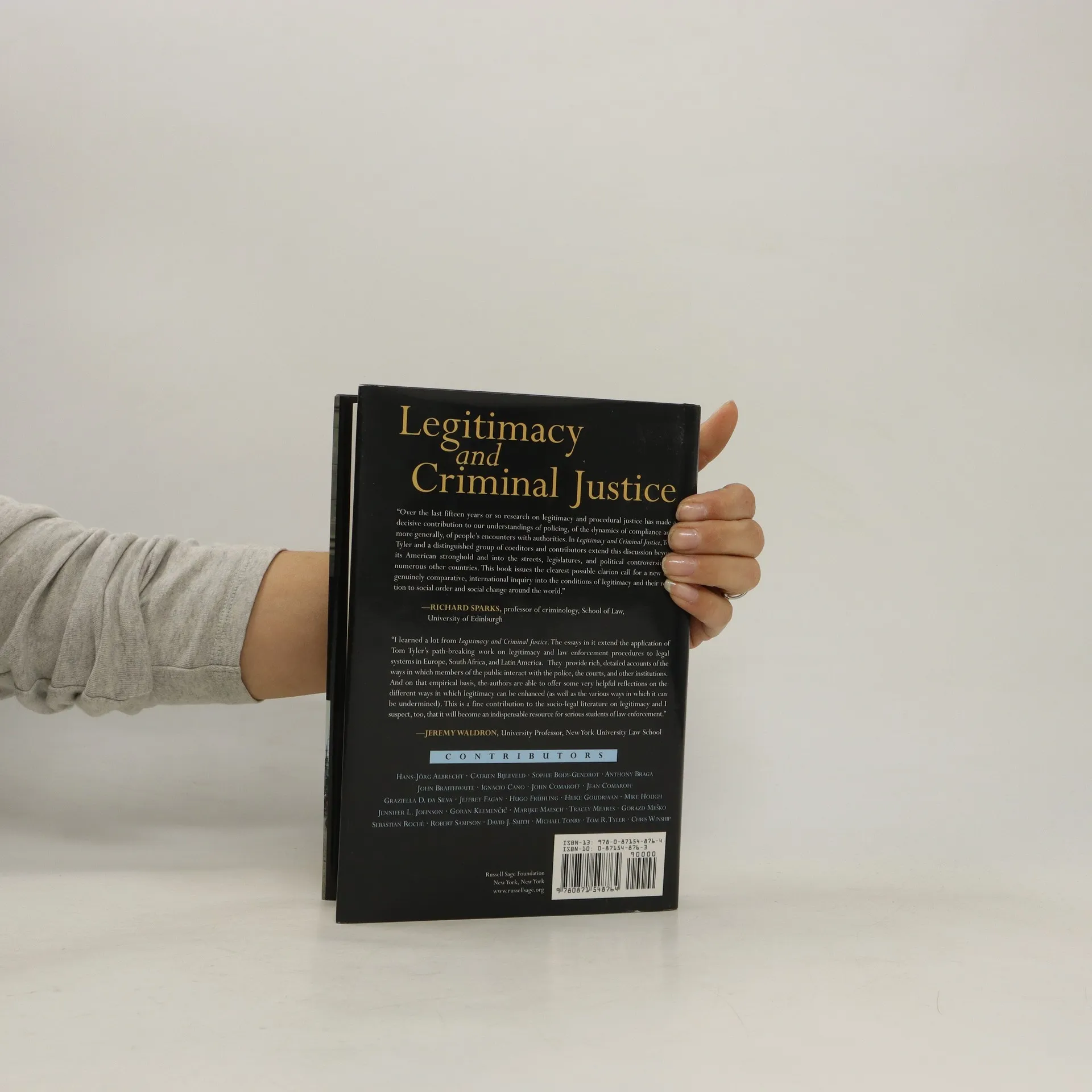
Legitimacy and Criminal Justice, Tom R. Tyler
- Jazyk

- Rok vydání
- 2007
- Vazba
- (pevná)
Doručení
Platební metody
Tady nám chybí tvá recenze.
- Titul
- Legitimacy and Criminal Justice
- Jazyk
- anglicky
- Autoři
- Tom R. Tyler
- Vydavatel
- Russell Sage Foundation
- Rok vydání
- 2007
- Vazba
- pevná
- Počet stran
- 395
- ISBN10
- 0871548763
- ISBN13
- 9780871548764
- Série
- Štítky
- Kriminalistika
- Hodnocení
- 3 z 5
- Anotace
- The police and courts rely on community cooperation to maintain order, yet many urban poor harbor distrust toward law enforcement. This study investigates the perceived legitimacy of legal institutions globally, examining relations between courts, police, and communities in the U.K., Western Europe, South Africa, Slovenia, South America, and Mexico. The authors highlight how social context shapes these relationships. For instance, in Slovenia, the transition to Western-style "community policing" was met with suspicion due to the legacy of Communist control, resulting in limited cooperation from citizens. In Guerrero, Mexico, farmers established an extra-legal policing system to address crime, gaining community support when federal authorities failed to act. The authors also explore how perceptions of legitimacy vary across social groups, noting that attitudes toward police differ significantly in unequal societies like Brazil and Chile. Ethnic minorities often exhibit greater distrust and feel targeted by police discrimination, as evidenced by biases in arrests of foreign-born individuals in Germany. The mutual hostility between police and minority communities can escalate into violence, as seen in the Parisian banlieue riots. The case studies underscore the necessity for law enforcement to consider community needs and attitudes to foster cooperation. This research illuminates the factors influencing the success or failure of