

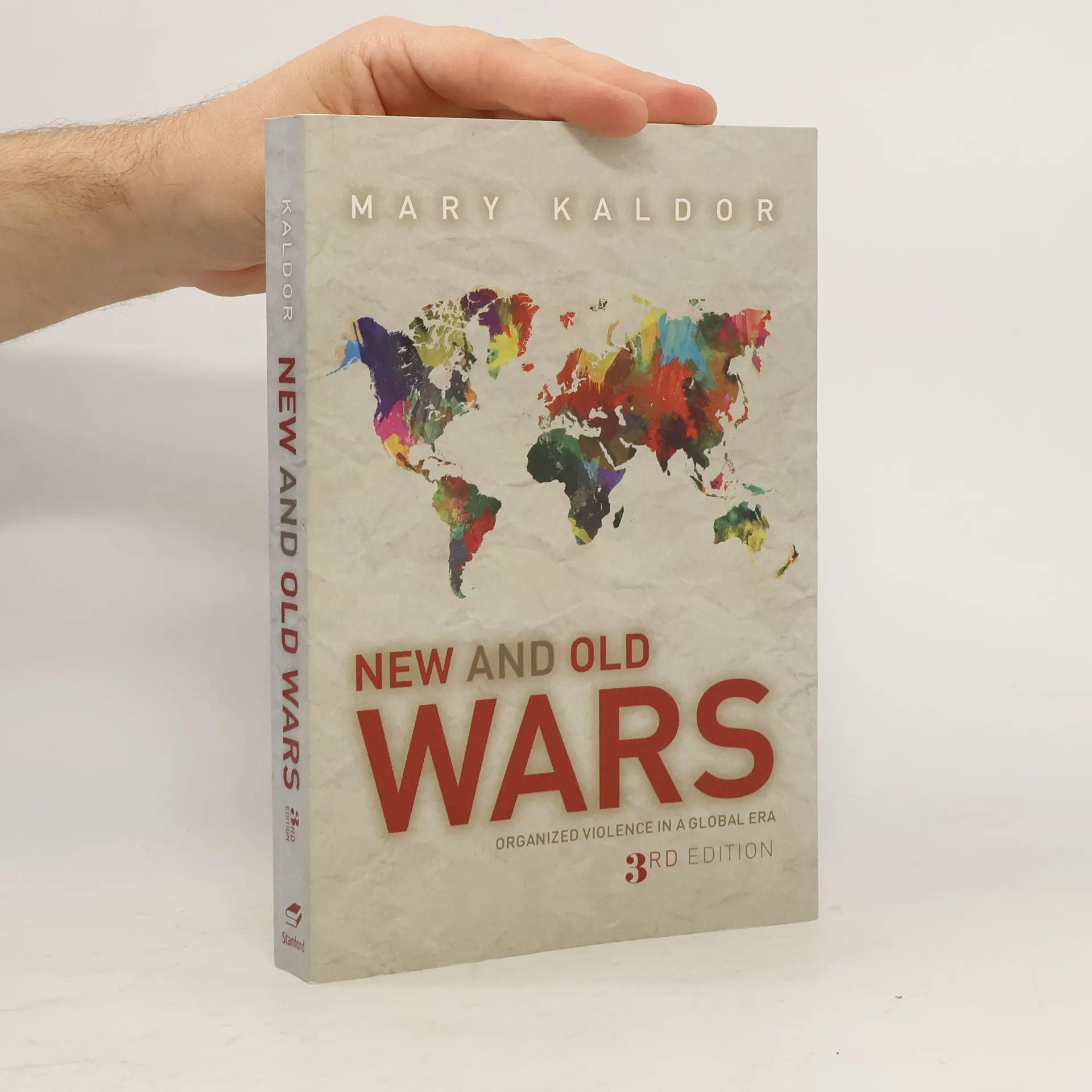
Parametry
- 268 stránek
- 10 hodin čtení
Více o knize
The author argues that, in the context of globalization, what we think of as war - war between states in which the aim is to inflict maximum violence - is becoming an anachronism. In its place is a new type of organized violence, which she calls "new wars", a mixture of war, organized crime, and massive violations of human rights. The actors are both global and local, public and private. These wars are fought for particular political goals using tactics of terror and destabilization that are theoretically outlawed by the rules of modern warfare; an informal criminalized economy is built into the functioning of these new wars. The author asserts that political leaders and international institutions have been unable to deal with the spread of these wars mainly because they have not come to terms with their logic; wars are treated either as old wars or as anarchy. Her analysis offers a basis for a cosmopolitan political response to these wars in which the monopoly of legitimate organized violence is reconstructed on a transnational basis, and international peacekeeping is reconceptualized as cosmopolitan law enforcement. The author shows how this approach has profound implications for the reconstruction of civil society, political institutions, and economic and social relations





Nákup knihy
New & Old Wars, Mary Kaldor
- Jazyk

- Rok vydání
- 2012
- Vazba
- (měkká)
Doručení
Platební metody
Tady nám chybí tvá recenze.
- Titul
- New & Old Wars
- Podtitul
- Organized Violence in a Global Era
- Jazyk
- anglicky
- Autoři
- Mary Kaldor
- Vydavatel
- Stanford University Press
- Rok vydání
- 2012
- Vazba
- měkká
- Počet stran
- 268
- ISBN10
- 080478549X
- ISBN13
- 9780804785495
- Série
- Štítky
- Naučná literatura, Společenské vědy, Historické téma, Historie, Politologie & Politika, Politika, Vojenské dějiny, Válečná próza, Války, Sociologie, Mezinárodní vztahy, Globalizace
- Původní název
- New and old wars
- Hodnocení
- 3,65 z 5
- Anotace
- The author argues that, in the context of globalization, what we think of as war - war between states in which the aim is to inflict maximum violence - is becoming an anachronism. In its place is a new type of organized violence, which she calls "new wars", a mixture of war, organized crime, and massive violations of human rights. The actors are both global and local, public and private. These wars are fought for particular political goals using tactics of terror and destabilization that are theoretically outlawed by the rules of modern warfare; an informal criminalized economy is built into the functioning of these new wars. The author asserts that political leaders and international institutions have been unable to deal with the spread of these wars mainly because they have not come to terms with their logic; wars are treated either as old wars or as anarchy. Her analysis offers a basis for a cosmopolitan political response to these wars in which the monopoly of legitimate organized violence is reconstructed on a transnational basis, and international peacekeeping is reconceptualized as cosmopolitan law enforcement. The author shows how this approach has profound implications for the reconstruction of civil society, political institutions, and economic and social relations