



Parametry
- 133 stránek
- 5 hodin čtení
Více o knize
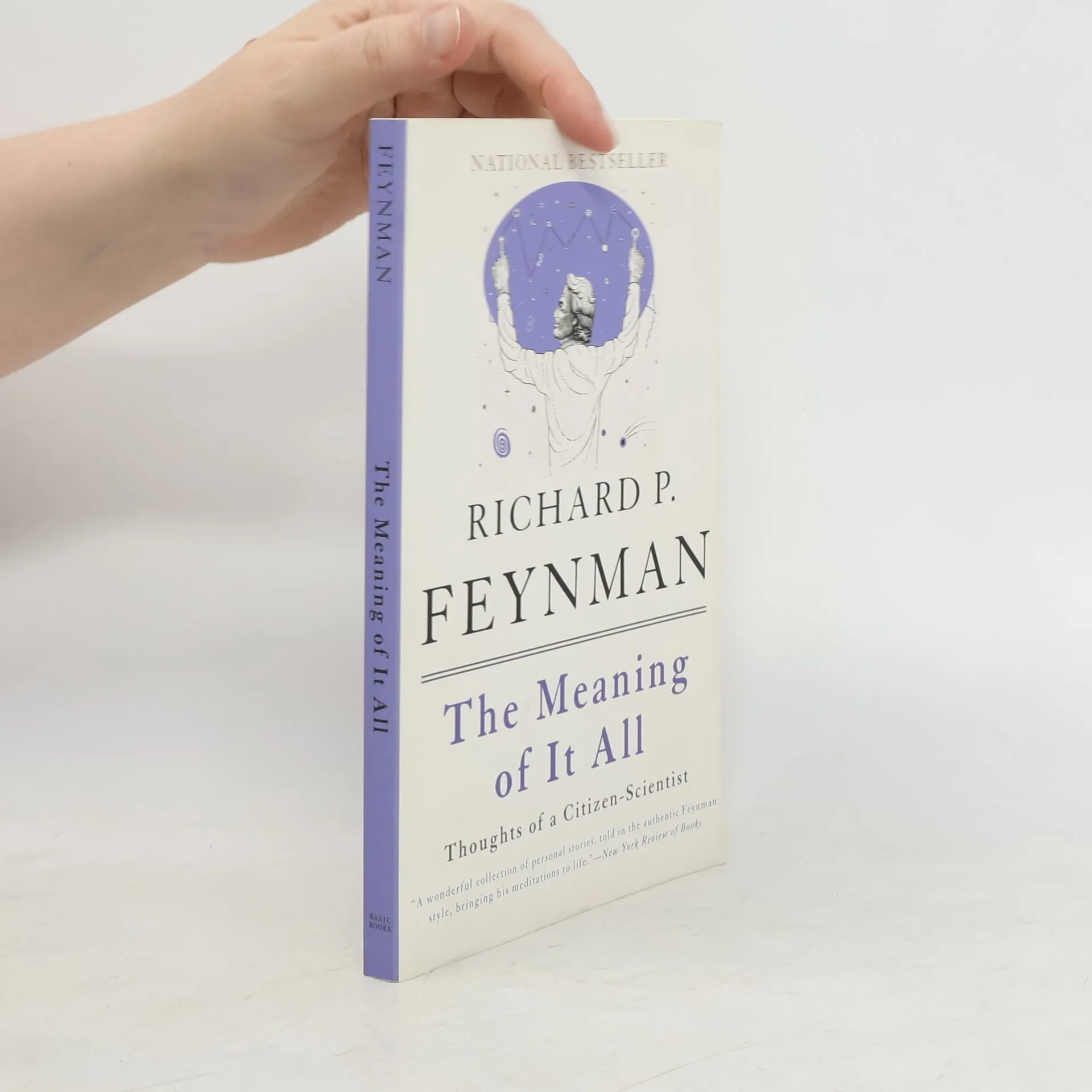
Many appreciate Richard P. Feynman's contributions to twentieth-century physics, but few realize how engaged he was with the world around him -- how deeply and thoughtfully he considered the religious, political, and social issues of his day. Now, a wonderful book -- based on a previously unpublished, three-part public lecture he gave at the University of Washington in 1963 -- shows us this other side of Feynman, as he expounds on the inherent conflict between science and religion, people's distrust of politicians, and our universal fascination with flying saucers, faith healing, and mental telepathy. Here we see Feynman in top form: nearly bursting into a Navajo war chant, then pressing for an overhaul of the English language (if you want to know why Johnny can't read, just look at the spelling of "friend"); and, finally, ruminating on the death of his first wife from tuberculosis. This is quintessential Feynman -- reflective, amusing, and ever enlightening.




Nákup knihy
The Meaning of It All, Richard Feynman
- Jazyk

- Rok vydání
- 2005
- product-detail.submit-box.info.binding
- (měkká)
Doručení
Platební metody
Tady nám chybí tvá recenze.
- Jazyk
- anglicky
- Autoři
- Richard Feynman
- Vydavatel
- Basic Books
- Rok vydání
- 2005
- Vazba
- měkká
- Počet stran
- 133
- ISBN10
- 0465023940
- ISBN13
- 9780465023943
- Série
- Štítky
- Naučná literatura, Společenské vědy, Skutečné příběhy, Životopisy, Věda & Matematika, Přírodní vědy, Filosofická tématika, Filosofie, Věda, Publicistika & Eseje, Fyzika, Životopisy myslitelů
- První vydání
- 1998
- Původní název
- The Meaning of It All: Thoughts of a Citizen Scientist
- Hodnocení
- 4 z 5
- Anotace
- Many appreciate Richard P. Feynman's contributions to twentieth-century physics, but few realize how engaged he was with the world around him -- how deeply and thoughtfully he considered the religious, political, and social issues of his day. Now, a wonderful book -- based on a previously unpublished, three-part public lecture he gave at the University of Washington in 1963 -- shows us this other side of Feynman, as he expounds on the inherent conflict between science and religion, people's distrust of politicians, and our universal fascination with flying saucers, faith healing, and mental telepathy. Here we see Feynman in top form: nearly bursting into a Navajo war chant, then pressing for an overhaul of the English language (if you want to know why Johnny can't read, just look at the spelling of "friend"); and, finally, ruminating on the death of his first wife from tuberculosis. This is quintessential Feynman -- reflective, amusing, and ever enlightening.