

Více o knize
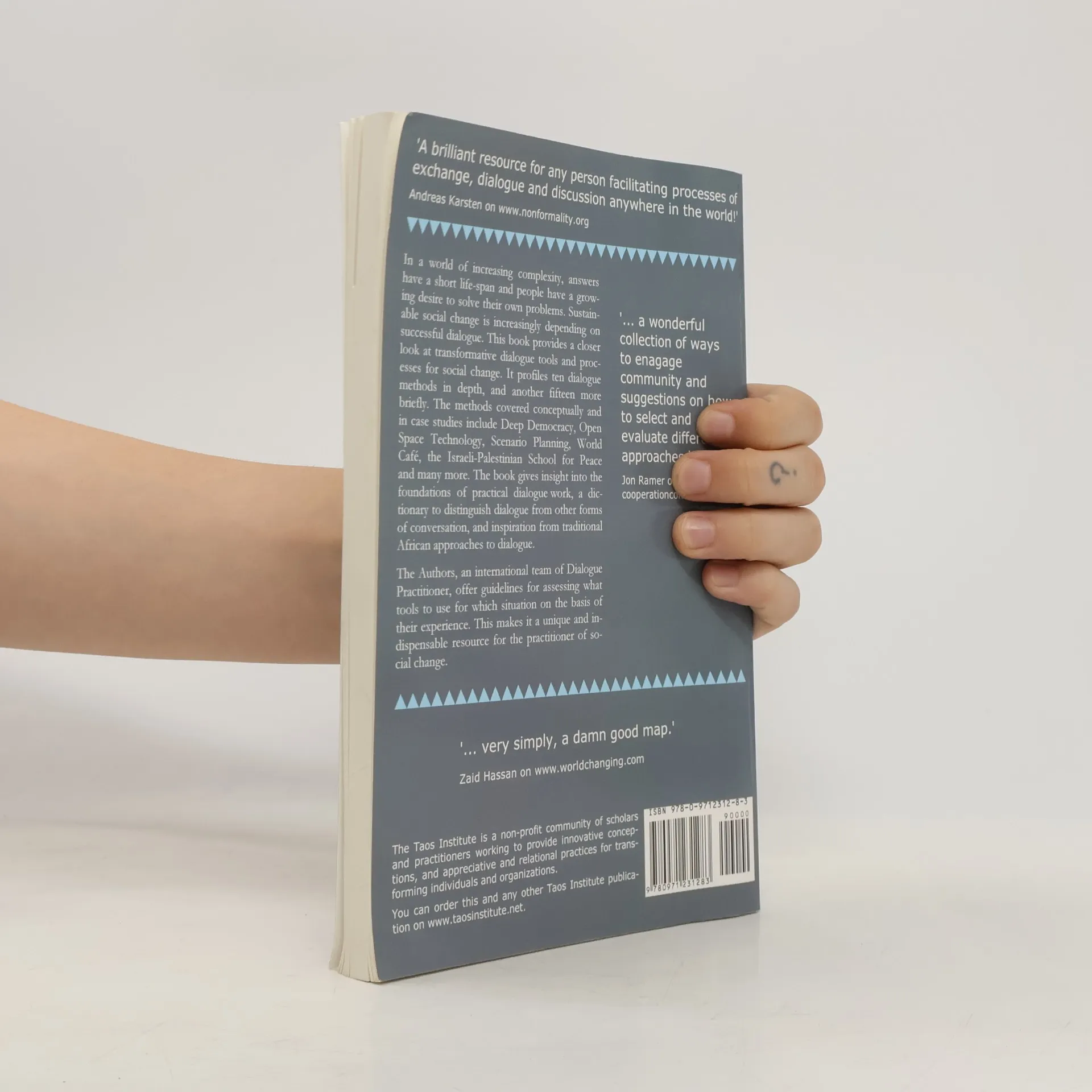
In a world of increasing complexity, answers have a short life-span and people have a growing desire to solve their own problems. Sustainable social change is increasingly depending on successful dialogue. This book provides a closer look at transformative dialogue tools and processes for social change. It profiles ten dialogue methods in depth, and another fifteen more briefly. The methods covered conceptually and in case studies include Deep Democracy, Appreciative Inquiry, Open Space Technology, Scenario Planning, World Cafe, the Israeli-Palestinian School for Peace and many more. The book gives insight into the foundations of practical dialogue work, a dictionary to distinguish dialogue from other forms of conversation, and inspiration from traditional African approaches to dialogue. The authors, an international team of Dialogue Practitioners, offer guidelines for assessing what tools to use for which situation on the basis of their experiences. This makes it a unique and indispensable resource for the practitioner of social change.
Nákup knihy
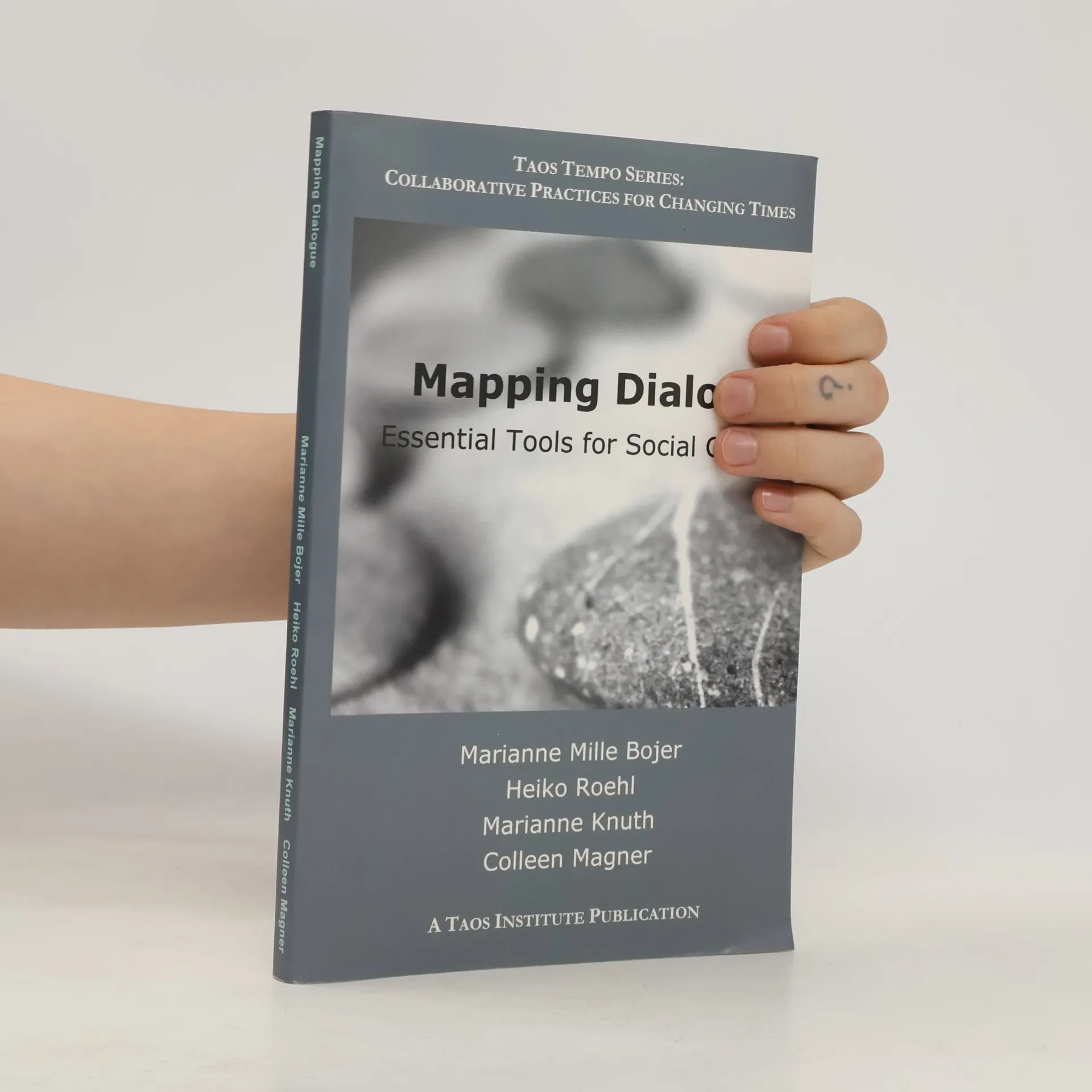
Taos Tempo Series: Collaborative Practices for Changing Times: Mapping Dialogue, Marianne Mille Bojer, Heiko Roehl, Marianne Knuth, Colleen Magner
- Jazyk

- Rok vydání
- 2008
- Vazba
- (měkká)
Nikdo zatím neohodnotil.
- Titul
- Taos Tempo Series: Collaborative Practices for Changing Times: Mapping Dialogue
- Podtitul
- Essential Tools for Social Change
- Jazyk
- anglicky
- Vydavatel
- Taos Institute Publications
- Rok vydání
- 2008
- Vazba
- měkká
- Počet stran
- 148
- ISBN10
- 0971231281
- ISBN13
- 9780971231283
- Série
- Anotace
- In a world of increasing complexity, answers have a short life-span and people have a growing desire to solve their own problems. Sustainable social change is increasingly depending on successful dialogue. This book provides a closer look at transformative dialogue tools and processes for social change. It profiles ten dialogue methods in depth, and another fifteen more briefly. The methods covered conceptually and in case studies include Deep Democracy, Appreciative Inquiry, Open Space Technology, Scenario Planning, World Cafe, the Israeli-Palestinian School for Peace and many more. The book gives insight into the foundations of practical dialogue work, a dictionary to distinguish dialogue from other forms of conversation, and inspiration from traditional African approaches to dialogue. The authors, an international team of Dialogue Practitioners, offer guidelines for assessing what tools to use for which situation on the basis of their experiences. This makes it a unique and indispensable resource for the practitioner of social change.