

Parametry
- 681 stránek
- 24 hodin čtení
Více o knize
'The purpose of this critique of pure speculative reason consists in the attempt to change the old procedure of metaphysics and to bring about a complete revolution' Kant's Critique of Pure Reason (1781) is the central text of modern philosophy. It presents a profound and challenging investigation into the nature of human reason, its knowledge and its illusions. Reason, Kant argues, is the seat of certain concepts that precede experience and make it possible, but we are not therefore entitled to draw conclusions about the natural world from these concepts. The Critique brings together the two opposing schools of philosophy: rationalism, which grounds all our knowledge in reason, and empiricism, which traces all our knowledge to experience. Kant's transcendental idealism indicates a third way that goes far beyond these alternatives.





Nákup knihy
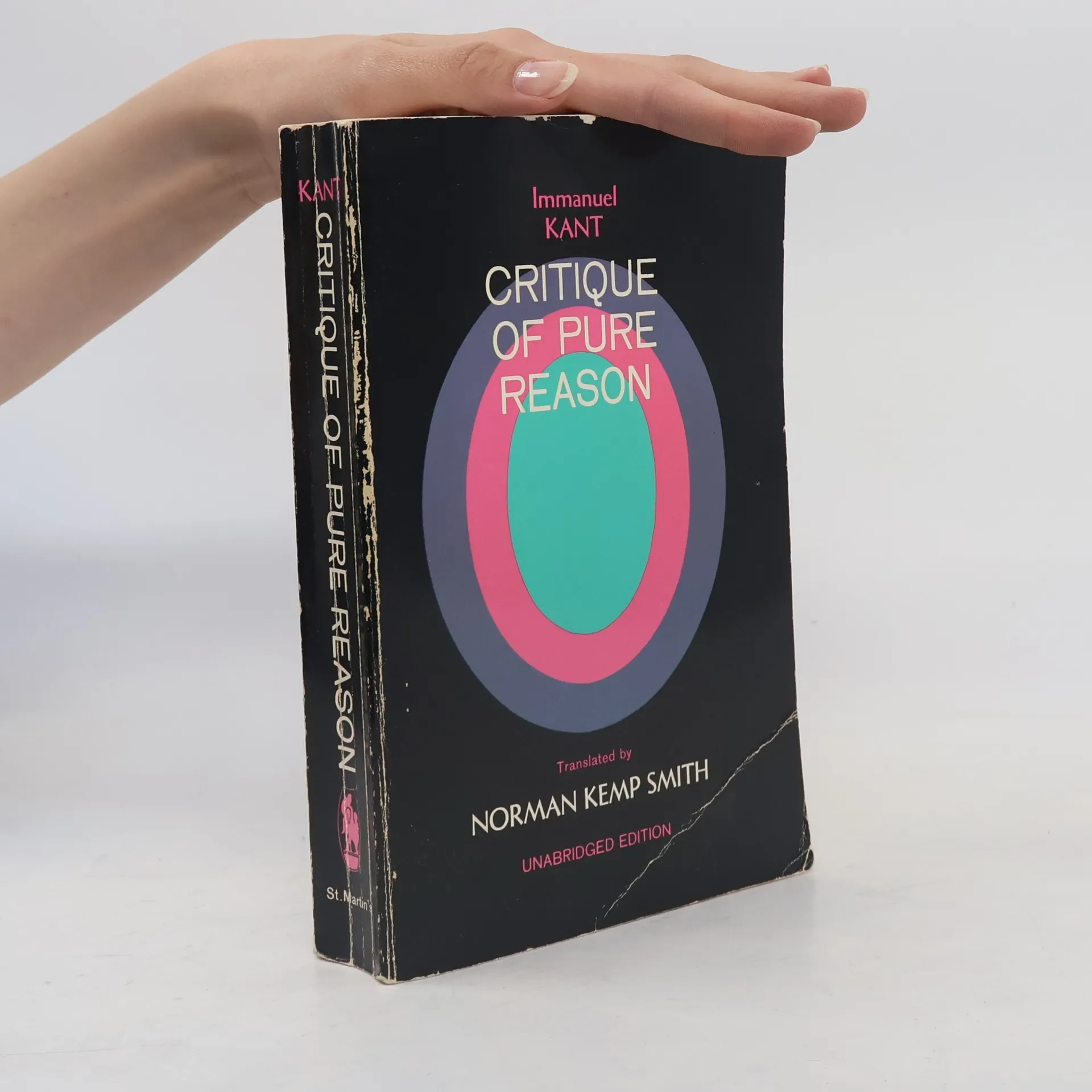
Critique of Pure Reason, Immanuel Kant, Norman Kemp Smith
- Jazyk

- Rok vydání
- 1965
- product-detail.submit-box.info.binding
- (měkká)
Doručení
Platební metody
Tady nám chybí tvá recenze.
- Podtitul
- Unabridged Edition
- Jazyk
- anglicky
- Autoři
- Immanuel Kant, Norman Kemp Smith
- Vydavatel
- St. Martin's Press
- Rok vydání
- 1965
- Vazba
- měkká
- Počet stran
- 681
- ISBN10
- 0312450109
- ISBN13
- 9780312450106
- Série
- Štítky
- Naučná literatura, Společenské vědy, Politologie & Politika, Psychologická tématika, Filosofická tématika, Německá literatura, Politika, Dárky pro dědu, Společnost, Vědecké teorie, Studium, 18. století, Kritika, Vědomosti a poznání, Osvícenství, Rozum, Krajky, Gnozeologie, epistemologie
- První vydání
- 1781
- Původní název
- Kritik der reinen Vernunft
- Hodnocení
- 4,1 z 5
- Anotace
- 'The purpose of this critique of pure speculative reason consists in the attempt to change the old procedure of metaphysics and to bring about a complete revolution' Kant's Critique of Pure Reason (1781) is the central text of modern philosophy. It presents a profound and challenging investigation into the nature of human reason, its knowledge and its illusions. Reason, Kant argues, is the seat of certain concepts that precede experience and make it possible, but we are not therefore entitled to draw conclusions about the natural world from these concepts. The Critique brings together the two opposing schools of philosophy: rationalism, which grounds all our knowledge in reason, and empiricism, which traces all our knowledge to experience. Kant's transcendental idealism indicates a third way that goes far beyond these alternatives.