

Parametry
- 209 stránek
- 8 hodin čtení
Více o knize
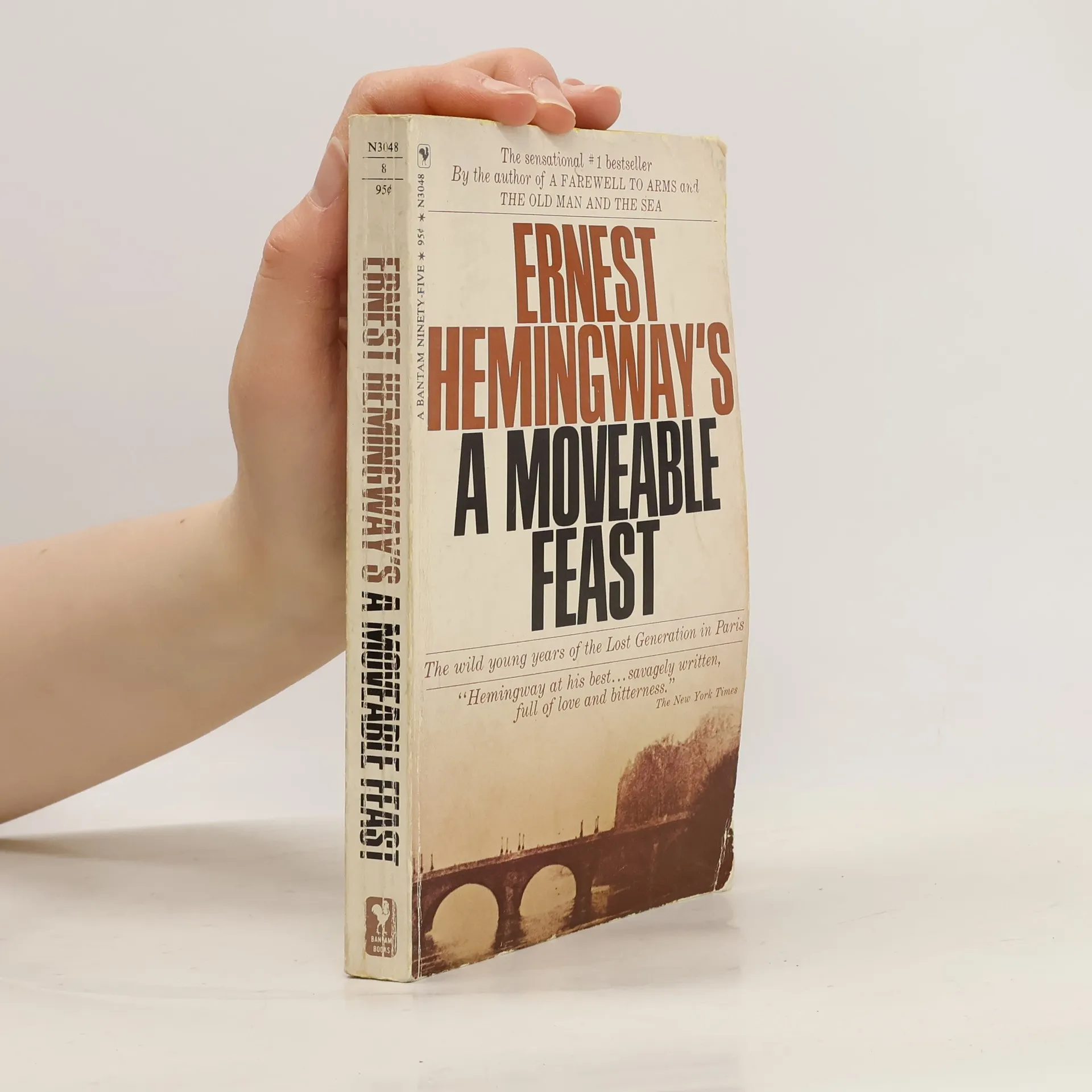
"You belong to me and all Paris belongs to me and I belong to this notebook and this pencil." Written in the autumn of 1957 and published posthumously in 1964, this work captures the essence of being young, poor, and a writer in 1920s Paris. Arriving in 1921 as a correspondent for the Toronto Star, Hemingway found himself in a city undergoing a cultural renaissance post-Great War. Artists like Braque and Picasso were redefining cubism, while literary figures such as James Joyce, fresh from completing Ulysses, and Gertrude Stein, who welcomed Hemingway into her circle, were shaping the era. During these formative years, the unpublished Hemingway gathered inspiration for his first novel, The Sun Also Rises, and other future masterpieces. The narrative includes vivid sketches of encounters with a diverse group of artists and writers, some destined for fame, others for obscurity. It also paints a portrait of the Paris that Hemingway experienced—a city of streets, cafés, and bookshops where he battled the challenges of near poverty while honing his craft. This work serves as both an elegy for the expatriate community of the 1920s and a reflection on the complexities of a writer's life.


Vydání





Nákup knihy
A moveable feast, Ernest Hemingway
- Jazyk

- Rok vydání
- 1965
- product-detail.submit-box.info.binding
- (měkká)
Doručení
Platební metody
Tady nám chybí tvá recenze.
- Titul
- A moveable feast
- Jazyk
- anglicky
- Autoři
- Ernest Hemingway
- Vydavatel
- Bantam Books
- Rok vydání
- 1965
- Vazba
- měkká
- Počet stran
- 209
- ISBN10
- 0553110713
- ISBN13
- 9780553110715
- Série
- První vydání
- 1964
- Původní název
- A Moveable Feast
- Hodnocení
- 3,6 z 5
- Anotace
- "You belong to me and all Paris belongs to me and I belong to this notebook and this pencil." Written in the autumn of 1957 and published posthumously in 1964, this work captures the essence of being young, poor, and a writer in 1920s Paris. Arriving in 1921 as a correspondent for the Toronto Star, Hemingway found himself in a city undergoing a cultural renaissance post-Great War. Artists like Braque and Picasso were redefining cubism, while literary figures such as James Joyce, fresh from completing Ulysses, and Gertrude Stein, who welcomed Hemingway into her circle, were shaping the era. During these formative years, the unpublished Hemingway gathered inspiration for his first novel, The Sun Also Rises, and other future masterpieces. The narrative includes vivid sketches of encounters with a diverse group of artists and writers, some destined for fame, others for obscurity. It also paints a portrait of the Paris that Hemingway experienced—a city of streets, cafés, and bookshops where he battled the challenges of near poverty while honing his craft. This work serves as both an elegy for the expatriate community of the 1920s and a reflection on the complexities of a writer's life.